
Reviewed · TURTLE WATCHING
Santa Maria: Sea Turtle Watching Experience on Sal Island
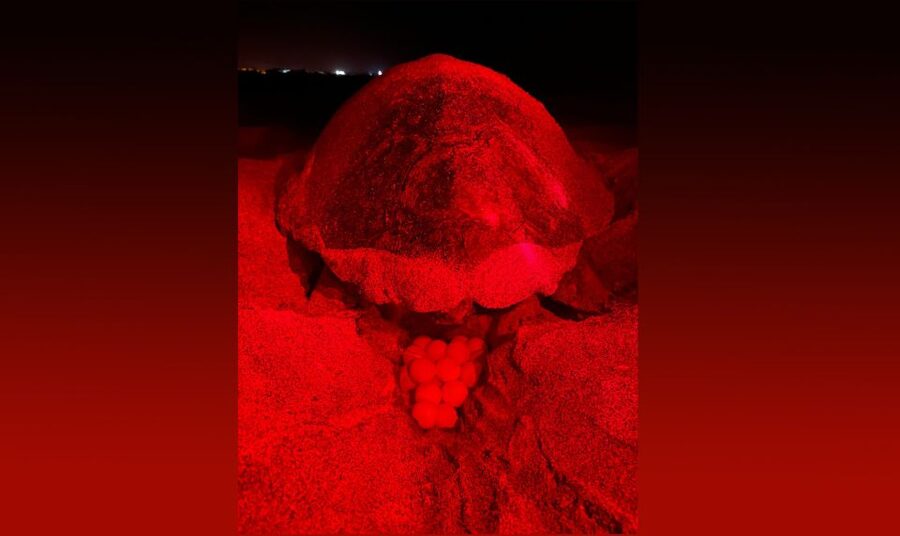
A female sea turtle hauling herself from the Atlantic, digging a nest, laying eggs, covering them, and returning to the surf is the heart of this Sal Island experience. You wait in darkness on a remote beach, then watch a wild animal carry out an ancient routine just a few feet away. It is quiet, slow, and far more memorable than a standard sightseeing stop.
I like the care taken by the guides, especially their use of small viewing groups and infrared lighting instead of flashlights. I also like the chance to speak with local biologists and guides such as Nany, Dani, and Chan, who explain the turtles’ life cycle and conservation work in clear, practical terms. The main drawback is simple: nature sets the timetable. You may wait two hours, and a sighting or full nesting sequence is never guaranteed.
Key points at a glance
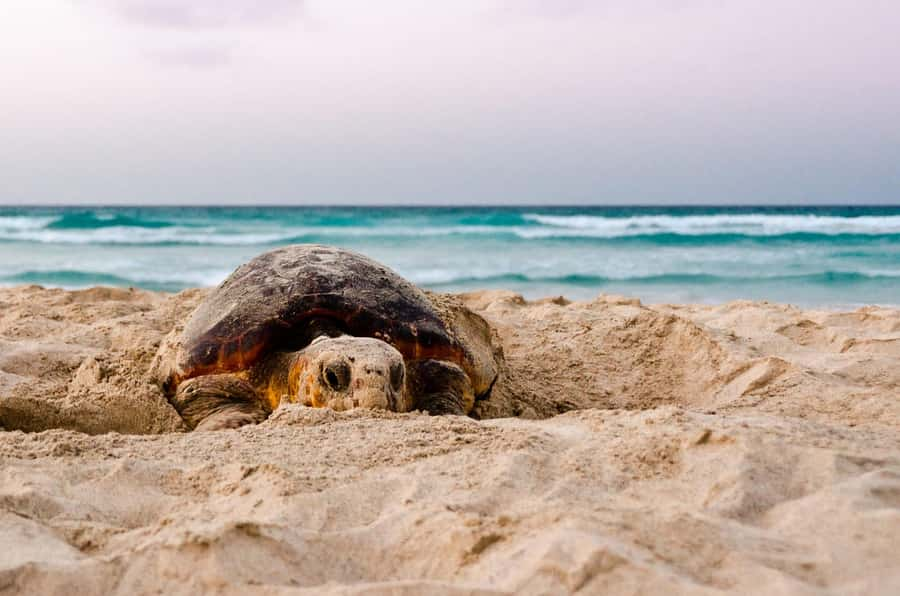
- The full nesting sequence is possible: You may see a turtle arrive, dig, lay eggs, hide the nest, and return to the sea.
- Guides put turtle welfare first: Dark clothing, silence, no flash, and infrared lighting help limit disturbance.
- The beach is reached by air-conditioned van: Pickup is included from your accommodation in Santa Maria.
- Waiting is part of the activity: Guides may search while you sit quietly beneath the stars.
- The outing usually lasts about two to three hours: Pickup can fall between 7:30 PM and 10:30 PM under current scheduling rules.
- This suits patient walkers: Sand, darkness, and quiet conditions make it unsuitable for wheelchair users, very young children, and people with a fear of the dark.
Why Sal is such an important turtle-watching place
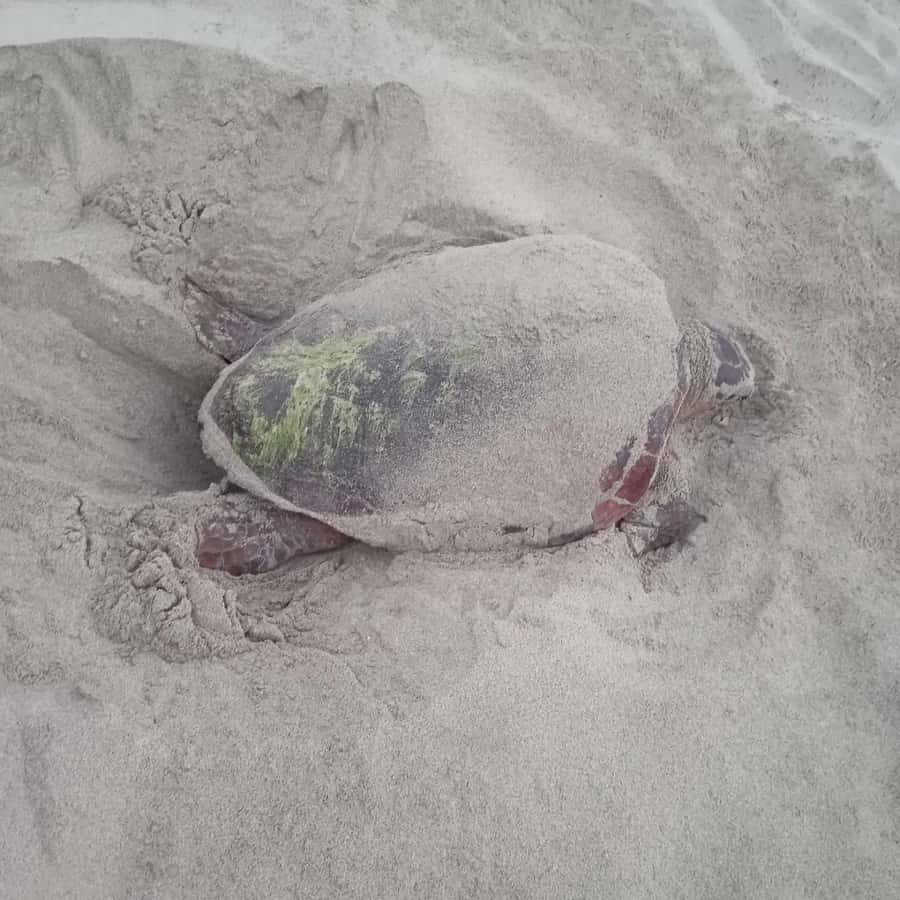
Cape Verde is home to three turtle species, and Sal’s sandy beaches are among the key nesting areas for the common turtle, also called the yellow turtle. The nesting season turns otherwise empty stretches of sand into breeding ground, but the beach remains a wild place rather than a stage prepared for visitors.
That matters. You are not visiting a rescue center or watching animals trained to appear at a set time. You are waiting for a turtle to choose the shore, find a suitable spot, and begin a process shaped by instinct and the sea.
The guides explain the turtle’s development, physical traits, nesting habits, and dangers. They also describe why protection is so important on Sal. The value of the outing is not only the sighting itself. You leave with a clearer idea of how much effort goes into protecting a nesting female, her eggs, and the hatchlings that may later reach the water.
More Turtle Watching in Sal
- Santa Maria: Sal Island Sea Turtle Watching Experience
★ 4.5 · 256 reviews - Turtle Watching Adventure
★ 5.0 · 98 reviews - 4h Turtle Watching with SSV Buggy Night 4WD
★ 5.0 · 20 reviews
The ride from Santa Maria to the beach
Pickup is included, and the trip begins at your accommodation in Santa Maria. The advertised pickup has been around 8 PM, but current environmental rules allow the activity to run at different times between 7:30 PM and 10:30 PM. You receive the exact transport time on the morning of the outing, so keep your evening flexible.
The ride to the beach is in a comfortable, air-conditioned vehicle. Depending on the beach and conditions, the journey can take less than an hour, with one report describing a trip of about 30 minutes. The vehicle is more than a minor convenience. After a warm day on Sal, air conditioning makes the evening ride pleasant, and you can use the journey to hear how the night will work.
Your guide explains the rules before you reach the sand. This is useful because the instructions are not optional etiquette. Flash photography, video recording, and personal flashlights are not allowed. Wear black, dark brown, dark blue, or dark gray clothing, and bring comfortable shoes for walking on sand.
A light jacket is sensible because the beach is open and the activity can run late. Mosquito repellent may also be useful, as one practical account specifically recommends it. These are small preparations, but they make it easier to sit still and pay attention once the search begins.
Walking onto a dark, quiet beach
After the vehicle stops, you walk a short distance over sand to selected viewing areas. The beach is usually deserted or lightly occupied, and the darkness is part of the experience. You will not have a bright path or a lit-up viewing platform, so this is not ideal for anyone who feels unsteady on loose sand.
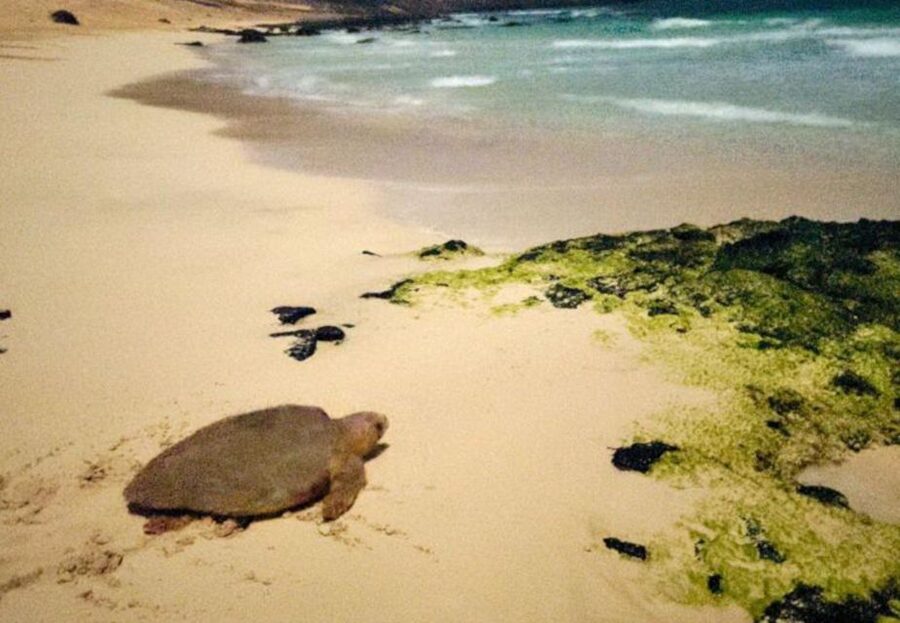
The guides may move off to look for turtles while you wait. This is the least predictable part of the evening. Sometimes a turtle is found quickly. At other times, you may wait 30 minutes or considerably longer. One account advises allowing for up to two hours, depending on when a turtle comes ashore and begins nesting.
I would treat the waiting as part of the outing rather than a service failure. You sit quietly under the night sky, listen to the beach, and wait for the guides to locate an animal that must not be chased or pushed into position. Still, you should know what you are buying: a chance to observe wild nesting behavior, not a guaranteed show at a fixed hour.
The stated recent success rate is 99 percent over five years, which is encouraging, but it does not promise that every person will see a full egg-laying sequence. Environmental conditions affect the result, and turtles sometimes approach the beach before turning back.
Watching the nesting process from arrival to return
If a turtle is found, the group is split into smaller units. This helps avoid a crowd pressing around one animal, and it gives more people a clear view. The guides direct you where to sit and remind you to remain as quiet and still as possible.
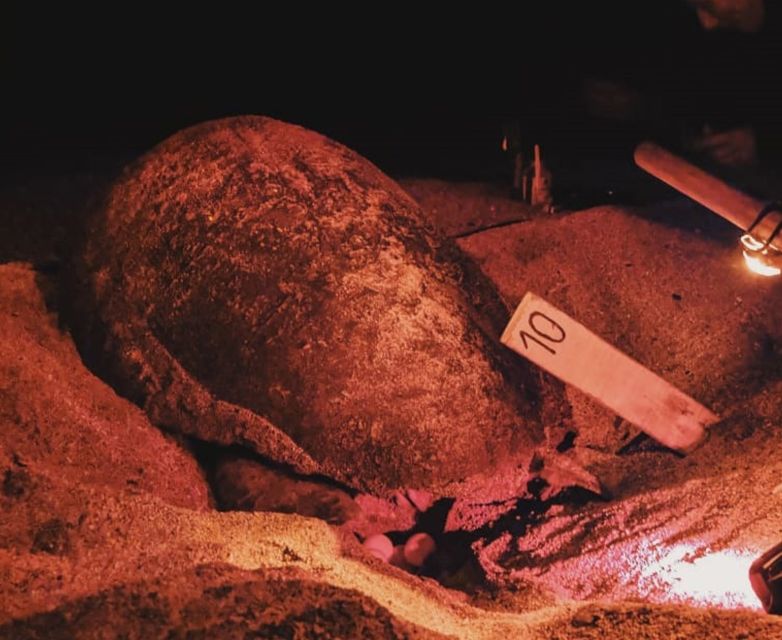
The most rewarding sequence begins when the turtle has selected a place to nest. You may see her use her rear flippers to dig a chamber in the sand, settle into position, and lay her eggs. Afterward, she covers the nest and disguises the spot before making her slow journey back to the water.
The whole process can take 45 minutes or more. You are not rushed from one stage to the next. This gives the guide time to explain what is happening, answer questions, and point out details that are easy to miss in the dark.
Some outings have seen several turtles. One evening included three turtles, while another included four arriving from the sea. Other groups have seen one turtle laying eggs and additional turtles approaching before moving away. Seeing a turtle is not the same as seeing the full nesting cycle, so listen carefully to the guide’s instructions and be ready for a patient evening.
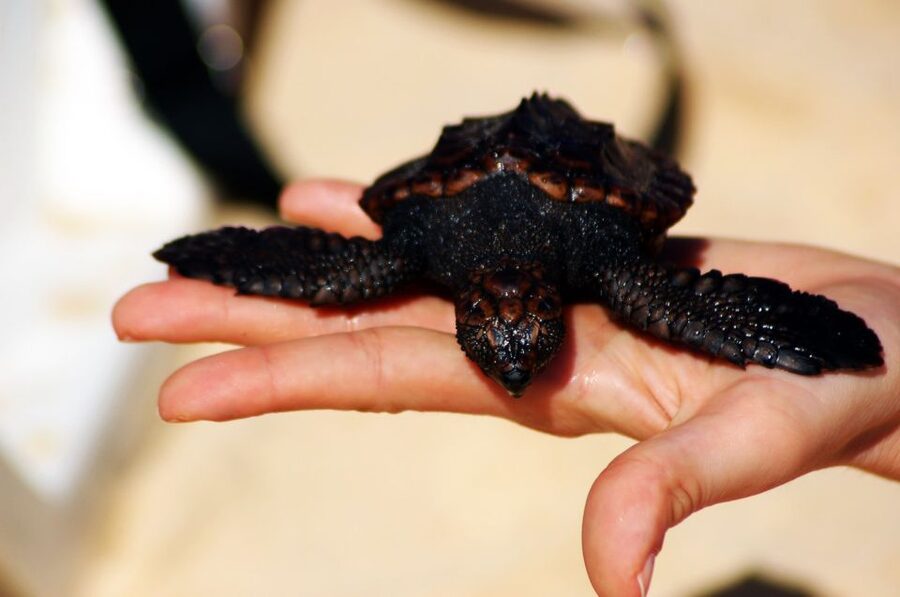
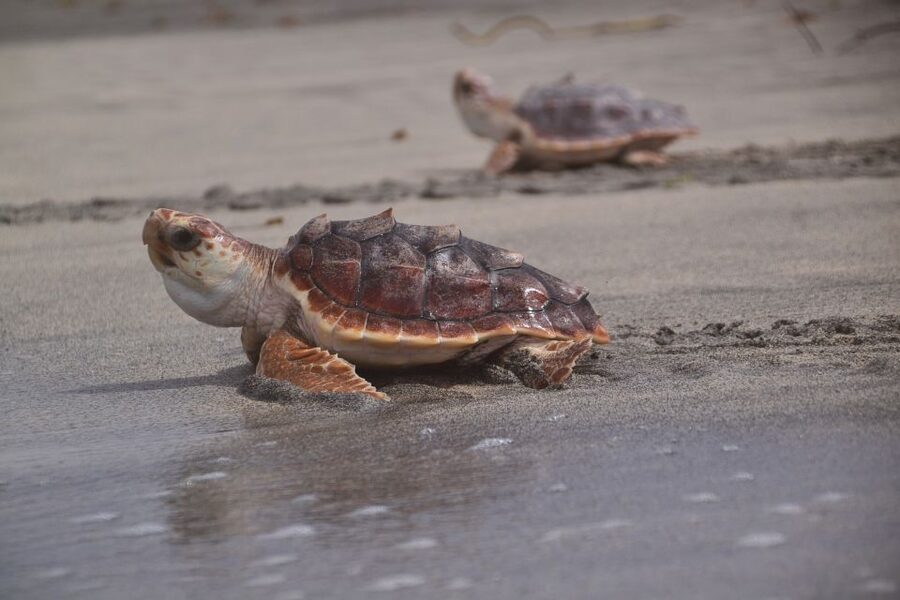
Hatchlings are possible but not assured. Some outings have included small turtles reaching the sea, while another had not seen any babies that year. The adult nesting process is the more reliable focus.
More turtle nights around Sal:
- Sal: Turtle Nesting with professional local guide
★ 4.7 · 18 reviews - Watch Sea Turtles Nesting – Night Tour in Sal Island
★ 4.1 · 14 reviews - Private Turtle Watching Experience
★ 5.0 · 12 reviews - Santa Maria: Sea Turtle Watching Experience on Sal Island
★ 4.0 · 9 reviews
Guides, conservation, and responsible viewing
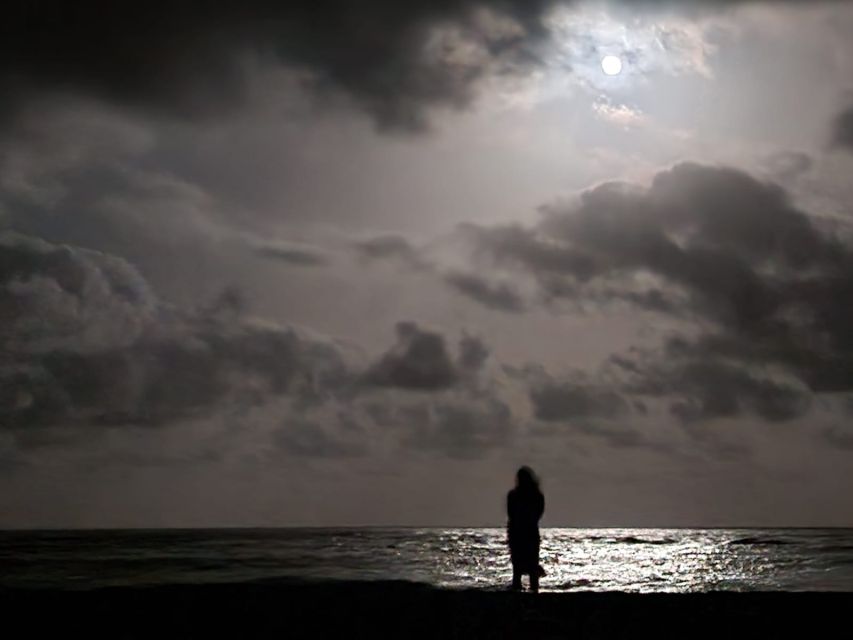
The guides are a major strength of this outing. Nany is repeatedly singled out for clear explanations and a warm manner. Dani has also guided groups, and Chan is praised for explaining both the turtle process and the wider story of Cape Verde. The available languages are English, Spanish, French, and Portuguese.
Good guiding matters here because the animal’s welfare must come before your photograph. A guide may ask you to wait, shift position, stay low, or move away from another turtle that has become unsettled. In one evening, several turtles came toward the beach but left after detecting people nearby. That is a useful reminder that even careful watching can affect behavior.
The guides use infrared lighting, which allows observation without the harsh glare of a normal flashlight. You still need to avoid bright screens and sudden movement. The restrictions on flash photography and video recording may disappoint anyone hoping to document every moment, but they help keep the encounter focused on the animal rather than on getting a perfect clip.
You may also see conservation staff taking measurements. This offers a glimpse of the practical work behind turtle protection, rather than presenting conservation as a vague idea. The guides can explain why the turtles are monitored and why keeping people at a suitable distance matters.
What the $41 price includes
At $41 per person, the price is fair if you want an organized wildlife experience rather than trying to reach a remote beach at night on your own. Hotel pickup and drop-off, transportation, a guide, the evening tour, and infrared lighting are included.
The strongest value comes from the access and supervision. You are taken to a known nesting area, briefed on responsible behavior, and guided through a sighting without needing to guess where to stand. The transport also removes the problem of finding an unfamiliar beach in the dark.
The price is less attractive if you need a fast, tightly timed excursion or guaranteed photographs. A large overall group may be present, although it can be divided into smaller viewing groups. You may spend much of the night waiting, and the turtle may not complete the sequence you hoped to see.
For me, the cost makes sense for visitors who value a genuine wildlife encounter and accept uncertainty. It is especially good value when you see the entire process, but you should book it for the experience of careful observation, not only for a checklist sighting.
Who should book this evening outing
This is a strong choice for nature lovers, couples, solo visitors, and families with older children who can stay quiet and walk over sand. It suits anyone who wants a slower, more thoughtful activity after a day of beach time.
You need patience. The turtle may take time to appear, and once she does, you may sit in one position for 30 to 45 minutes or longer. People who want constant commentary, bright facilities, or a fixed return time may find the format frustrating.
The tour is not recommended for children under three, wheelchair users, or people with mobility impairments. It is also unsuitable for anyone with a fear of the dark or anyone under the influence of alcohol. These limits are practical, not fussy. The setting is dark, the ground is sandy, and the group must remain calm around the animals.
Simple preparation for a better sighting
Wear dark clothing from head to toe if possible. Avoid white shirts, bright colors, reflective details, and anything that might catch the turtle’s attention.
Choose shoes that stay secure on sand. Comfortable walking shoes are more useful than sandals that slip or fill with sand. Bring a light jacket for the late evening and consider mosquito repellent.
Before the tour, charge your phone if you need it for the hotel return details, but do not plan on using it as a torch or filming the encounter. The night is better when you are not trying to manage a screen.
Most important, accept that silence and waiting are part of the conservation effort. The less you disturb the beach, the better the chance that a turtle will continue nesting normally.
Should you book the Sal turtle-watching experience?
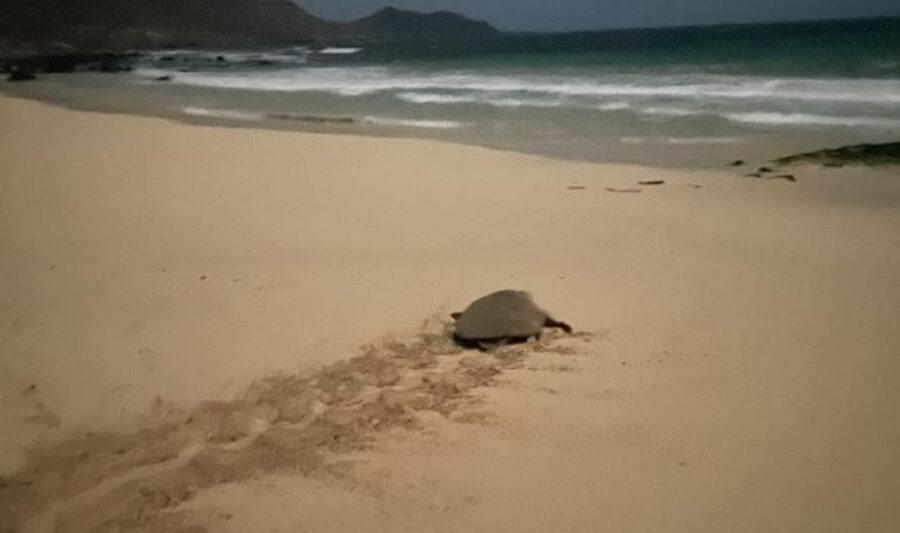
I would book this if you have one evening on Sal and want an encounter with local wildlife that feels genuinely tied to the island. The combination of a remote beach, patient guides, and the chance to watch the entire nesting process is unusual, and the 4.6 rating from 446 reviews supports its strong track record.
I would skip it if you need guaranteed sightings, dislike darkness, cannot walk across sand, or have only a narrow window before another commitment. For everyone else, the key is to arrive dressed in dark clothes and ready to wait. At its best, this is not just turtle watching. It is a quiet lesson in how wild animals live when people give them room.
FAQ
Where does the sea turtle experience take place?
The tour starts with pickup in Santa Maria and continues to a beach on Sal Island where turtles come ashore to nest. The specific beach is not stated in advance.
What time does the tour begin?
The pickup has been around 8 PM, but the current schedule can vary between 7:30 PM and 10:30 PM. The exact transport time is confirmed on the morning of the activity.
How long does the experience last?
The expected return to your accommodation is around 10 PM or 11 PM. Waiting time can vary, and you may wait up to two hours depending on turtle activity.
Is seeing a turtle guaranteed?
No. Nesting depends on environmental factors and is not guaranteed. The stated success rate has been 99 percent over the previous five years.
What turtle species might I see?
Cape Verde is home to three turtle species. The yellow turtle, also called the common turtle, is the most common nesting species in Cape Verde.
Can I take photos or videos?
Flash photography and video recording are not allowed. Personal flashlights are also prohibited. The guides provide infrared lighting for observation.
What should I wear?
Wear dark-colored clothes such as black, dark brown, dark blue, or dark gray. Comfortable shoes are important because you walk across sand, and a light jacket may be useful at night.
Is the tour suitable for young children or wheelchair users?
The experience is not suitable for children under three, wheelchair users, or people with mobility impairments. It is also not recommended for people with a fear of the dark.
What does the $41 price include?
The price includes hotel pickup and drop-off, transportation, the guided tour, and infrared lighting. Guides are available in Spanish, French, Portuguese, and English.
Newly listed around Sal
- Watch Sea Turtles Nesting – Night Tour in Sal Island★ 4.1 · 14 reviews
- 3-Hour Shark Bay and Salt Lakes in Sal Island Guided Tour★ 4.5 · 19 reviews
- Turtle Experience in Sal island★ 4.0 · 5 reviews
- Secrets of Sal Island 4×4 Tour with Pedra da Lume Salt Lake★ 4.5 · 6 reviews
- Sal island: Private Santa Maria City Tour, Street Art and Tapas★ 5.0 · 6 reviews
- Sal Island: 3-Hour Private Tour with Floating in Salt lake & Shark Watching★ 5.0 · 8 reviews
- Small Group Full Day Island Tour in Sal★ 4.0 · 12 reviews
- Sal island: Espargos city tour, Local life and Cape Verde Tapas★ 4.5 · 22 reviews
Turtle Watching, compared.

Shark, Turtles, Cave, Sandboarding & Tasting Tour
Read our review →
Turtle, Shark, Santa Monica, Sandboard & Tasting
Read our review →

Beautiful Beaches, Turtles & Djeu Island Snorkel
Read our review →

Browse the lists this tour appears in