
Reviewed · CAPE VERDEAN FOOD
Santa Maria City Tour & Cuscuz Tasting with a Local Family
Santa Maria’s best moments here happen away from the resort strip. You move from the municipal market to a local family’s home, where cuscuz and fidjos are prepared for you, then continue to Shells Beach, the salt pans, and Ponta Preta. It is a quick tour, but it gives you several useful windows into everyday life on Sal.
I like the homemade food stop, especially because you meet the family who prepares it rather than receiving a standard restaurant tasting. I also like the mix of places: salt extraction and fishing give the beach scenes some local meaning, while the market and street art help you see Santa Maria as a living town, not just a holiday base.
The main caution is the two-hour schedule. There is a lot packed into it, and one delayed departure left a group seeing the salt pans and beach after dark. Confirm your start time, and avoid booking this if you want long, unhurried stops at every location.
Key points to know
- Homemade cuscuz and fidjos: Visit a local family and taste Cape Verdean dishes made with corn and banana.
- Guides with local personality: Guides named Alejandro, Alihandro, and Djibril have led recent tours, with English, French, and Portuguese available.
- A compact Santa Maria overview: The market, street art, souvenir shops, Pontão, Shells Beach, salt pans, and Ponta Preta all fit into one outing.
- A useful salt story: Learn how traditional salt extraction shaped Santa Maria and helped give Sal Island its name.
- Small-group format: Groups are limited to 10, with hotel pickup and drop-off in Santa Maria.
- Bring beach basics: Biodegradable sunscreen, a hat, and sandals are specifically recommended.
A local taste of Santa Maria in two hours
This tour works because it links food, work, and scenery. Many short town tours simply point out a few sights and return you to your hotel. Here, you also sit down with a Cape Verdean family and taste food made in a home setting.
The price is $41 per person. That is fair value if you want transport, a licensed guide, a small group, and several stops without arranging taxis yourself. The food tasting adds something you would not get from a standard drive around town, and the hotel pickup makes this easy to fit into a first or last day on Sal.
Still, keep the length in mind. Two hours is enough for an introduction, not a slow cultural day. You will see many places, but some stops may be brief. The tour is best for someone who wants orientation, local conversation, photographs, and a taste of Sal’s food traditions in one neat package.
More cachupa, cuscuz and local tables on Santa Maria Cape Verde:
- Sal: Espargos City Tour, Local Life, and Cape Verde Tapas
★ 4.7 · 200 reviews - Sal island: Santa Maria city tour, street art and tapas
★ 4.8 · 37 reviews - From Praia: Banana Plantation Tour and Cuscuz Workshop
★ 4.8 · 75 reviews
Starting at Santa Maria’s municipal market
Your guide picks you up at your Santa Maria accommodation and takes you to the municipal market. This is a useful first stop because it connects the town’s daily shopping with Cape Verde’s food culture.
The tour explains how legumes, fruits, and vegetables made their way to Cape Verde’s volcanic islands. That context matters. Sal can look dry and spare, so a market full of produce tells you something about trade, farming, food supply, and the practical work behind local cooking.
You will have time to look around and interact with residents. The experience is not only about taking photographs. It gives you a chance to see the market as a place where people shop and work.
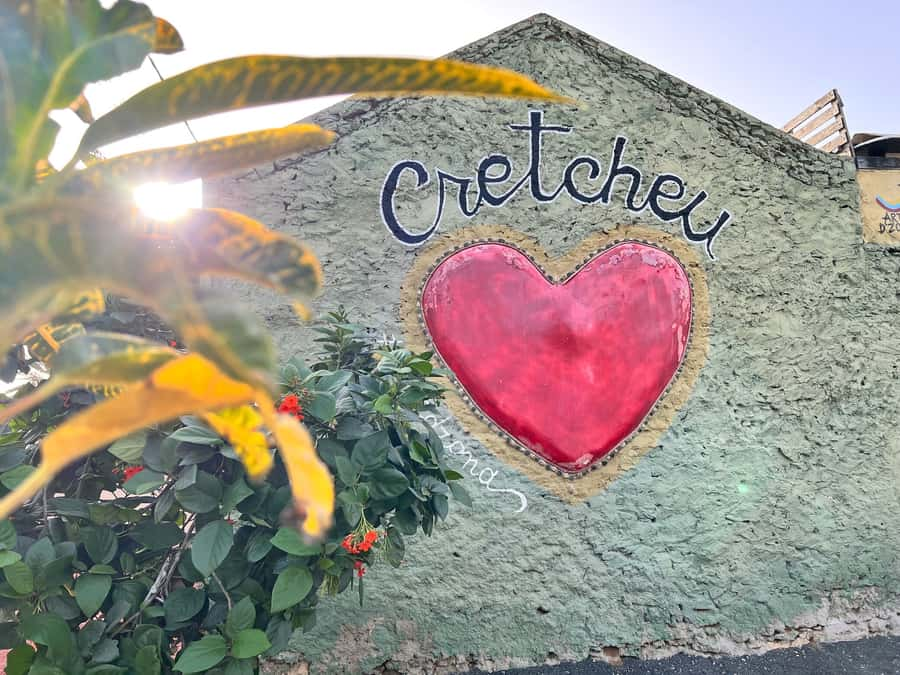
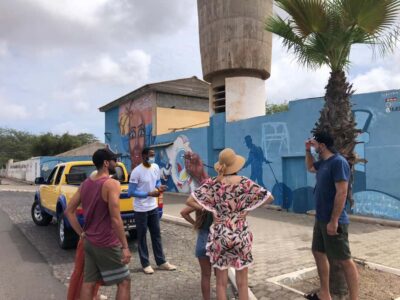
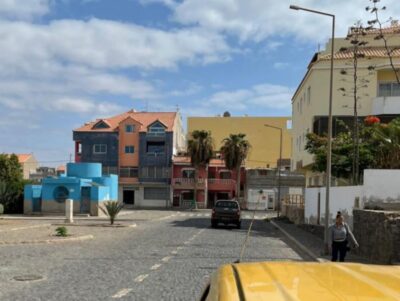
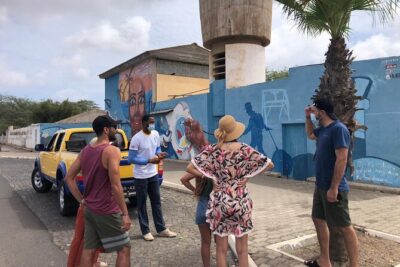
Street art and brightly painted houses add another layer. The walls tell stories about Sal Island and its people, so keep your eyes open between the formal stops. A good guide can turn a painted doorway or mural into a short lesson about local life.
Recent groups have singled out the market as one of the strongest parts of the tour. I can see why. It offers more texture than a quick monument stop, and it helps you understand Santa Maria before you reach the waterfront.
Meeting a Cape Verdean family over cuscuz and fidjos
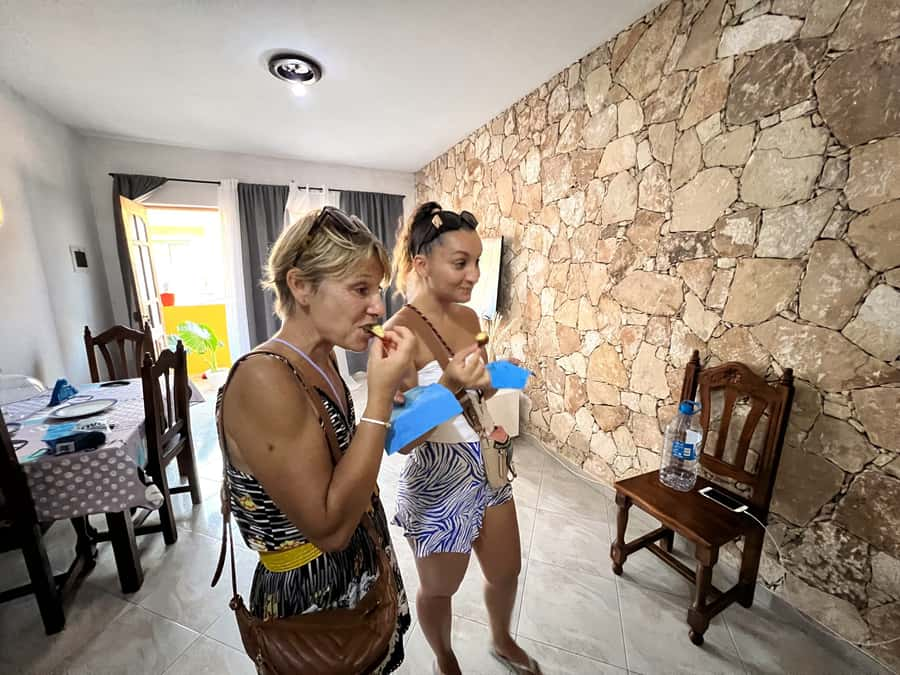
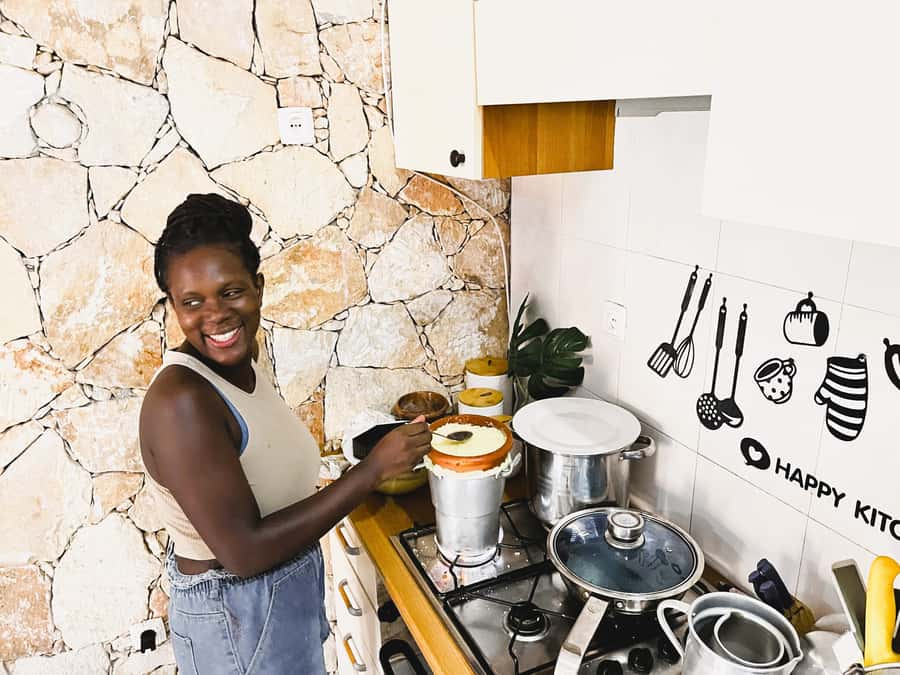
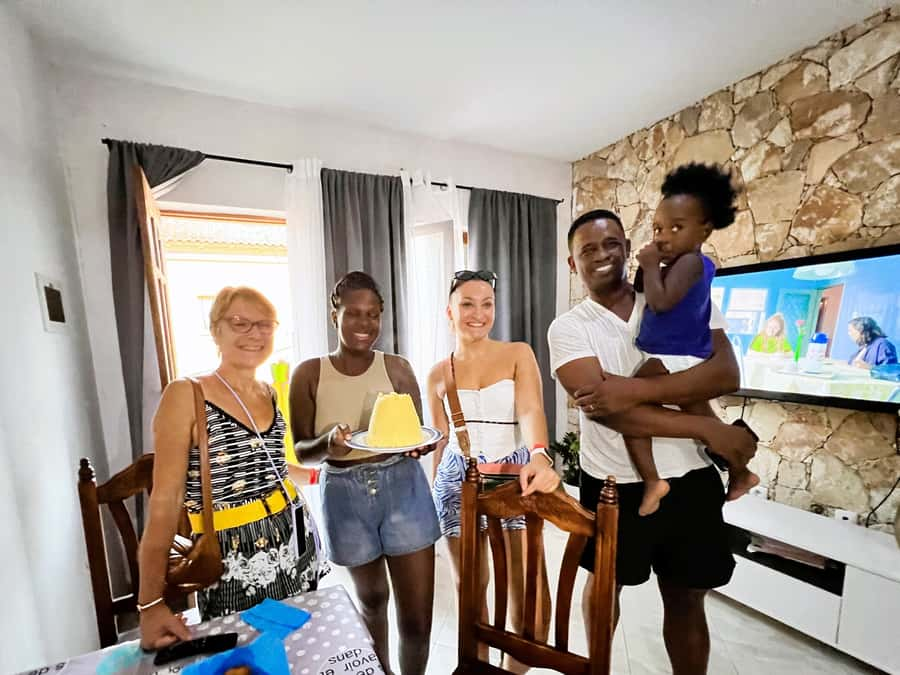
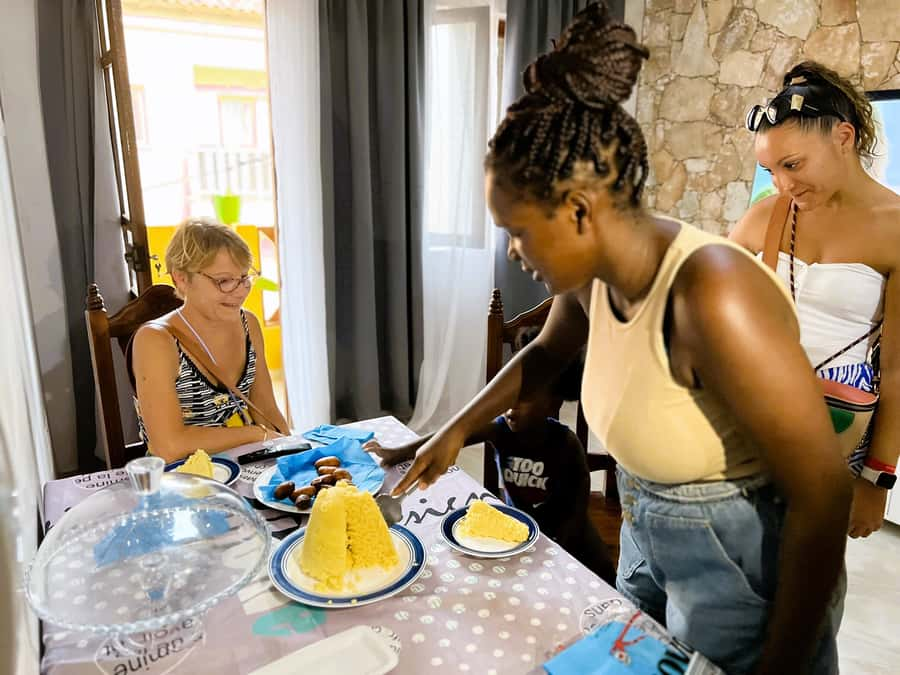
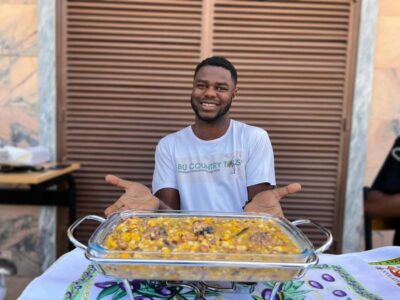
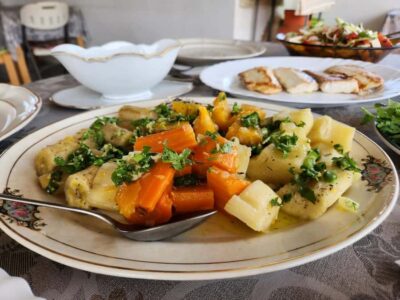
The most personal part of the tour comes at a local family’s home. You taste cuscuz and fidjos prepared with ingredients such as corn and banana, including organically grown produce according to the tour details.
Cape Verdean cuscuz is not the sweet breakfast pudding familiar in some other countries. Here, the dish is part of local island cooking, and the preparation is as important as the taste. Fidjos gives you another sample of home-style food, with banana among the ingredients described for the tasting.
This stop is more than a snack. You meet the people who cook the food, see the welcome offered in a family setting, and learn through an everyday meal rather than a formal demonstration. Melissa has prepared the tasting for recent groups, while Djibril, also spelled Gybril in tour feedback, has welcomed visitors and guided them through the food experience.
You should expect hospitality, but not a restaurant service model. This is a home visit, so the setting may feel simple and personal. If you prefer a polished dining room or a long meal with many courses, this may feel limited. If you want a direct connection to Cape Verdean food, it is the part most likely to stay with you.
The tasting has earned especially strong praise. People have described the cuscuz and fidjos as freshly made and delicious, and the warmth of the family welcome comes through again and again. That is a useful sign for anyone choosing between a standard food stop and a local-home visit.
Shells Beach and the work behind the photographs
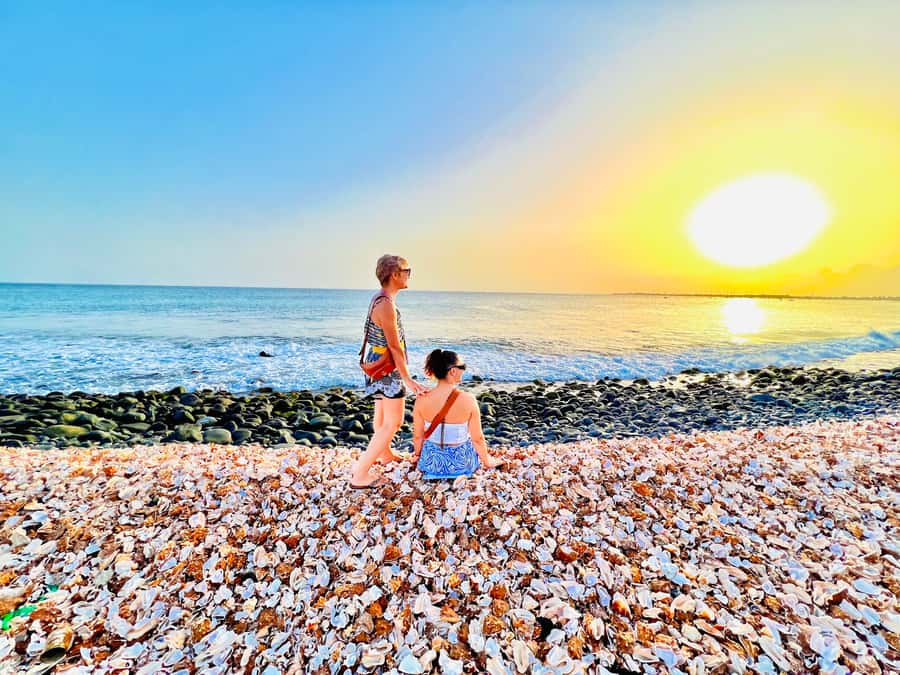
Next, you head to Santa Maria Shells Beach. The name fits the view: shells line parts of the shore, and the beach offers a different scene from the broad sandy stretches often associated with Sal.
Bring your camera, but do not treat this as only a photo stop. The guide explains the role of seafood fishing and shell collection in the local economy. For some people in the community, this work provides income, so the beach becomes a place of work as well as a scenic spot.
The stop is likely to appeal to photographers and anyone interested in how local people use the coast. You may find good angles in the shells, boats, shoreline, or fishing activity, depending on conditions and what is happening that day.
The trade-off is time. Shells Beach is not presented as a long beach visit with a full afternoon for swimming. It is one piece of a fast-moving route, so expect a chance to look, learn, and take photographs rather than settle in for hours.
More food and tastings on Santa Maria Cape Verde:
- Boa Vista: Shark, Turtles, Cave, Sandboarding & Tasting Tour
★ 4.8 · 328 reviews - Boavista: Turtle, Shark, Santa Monica, Sandboard & Tasting
★ 4.7 · 228 reviews - Like Locals: Praia and Cidade Velha Tour + Local Pontxi Tasting
★ 5.0 · 19 reviews - São Filipe: Fogo Volcano with Wine and Cheese Tasting
★ 4.0 · 9 reviews
Santa Maria center, shops, and the Pontão
The tour then returns to the center of Santa Maria. You will have time to visit local souvenir shops and meet people in town. This is a practical chance to pick up a small keepsake, but it also shows you the commercial side of Santa Maria beyond the hotels.
The shops may appeal if you want crafts or a simple reminder of Sal. Do not feel pressured to buy. The value of this part is seeing how the town presents local goods and how the visitor economy fits beside ordinary community life.
The route continues to the Pontão fishing area. The Pontão is closely tied to Santa Maria’s working waterfront, making it a useful place to connect the town’s fishing activity with what you saw at Shells Beach.
This part can feel brief, especially if the group is running behind. Ask your guide questions while you are there. The tour is small, with no more than 10 participants, so you should have a better chance of getting an answer than on a large coach outing.
Santa Maria Salt Pans and the story of Sal
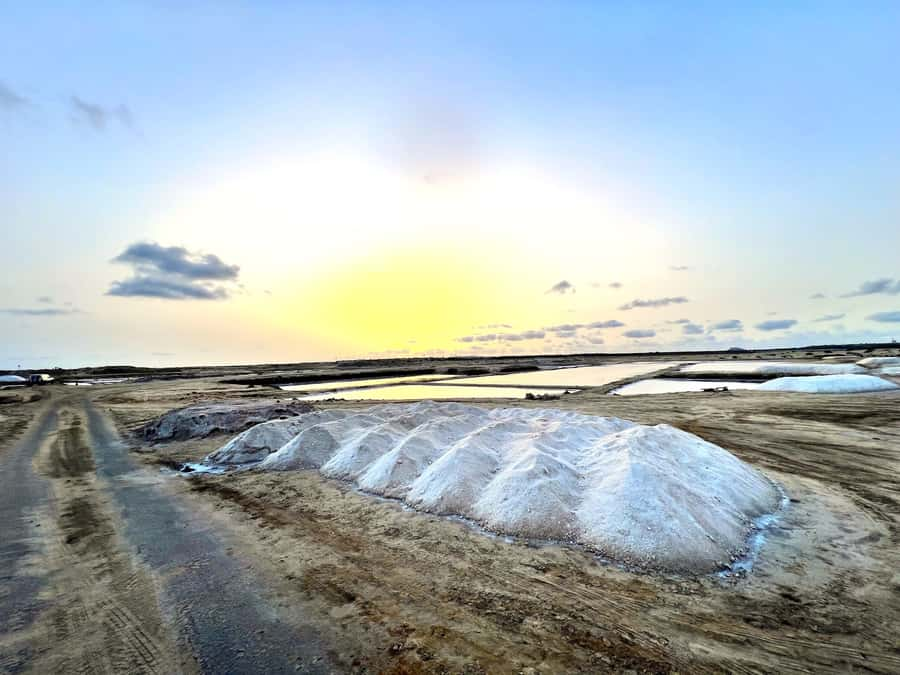
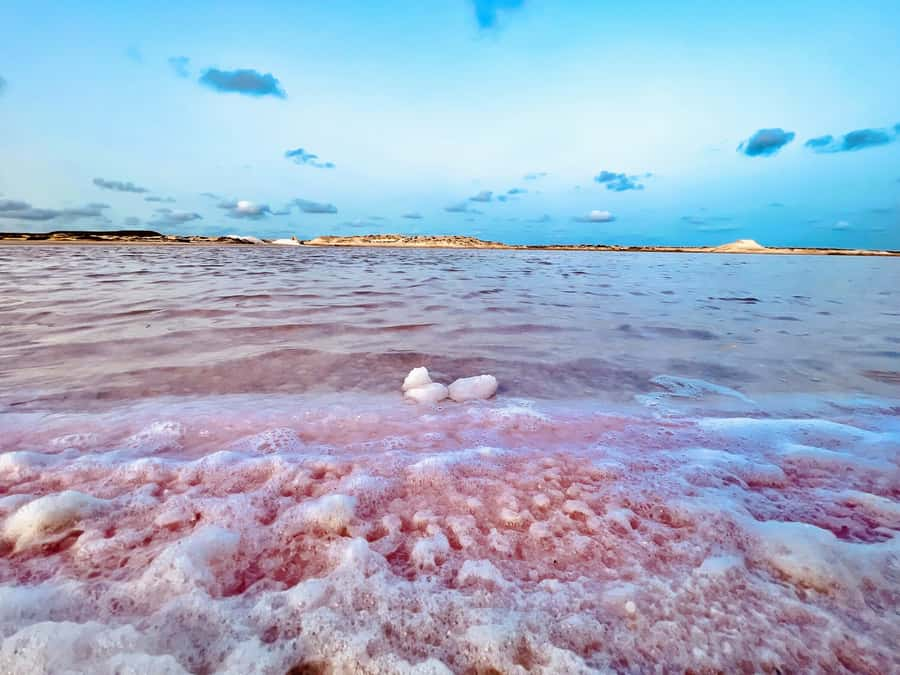
The salt pans are one of the tour’s most distinctive stops. You learn about traditional salt extraction and the role it played in the island’s past. The name Sal itself is linked to salt, so this is not a random scenic detour. It explains one of the basic facts of the island’s identity.
The process also helps you read the setting differently. What may first look like pale, shallow pools becomes evidence of work, trade, and adaptation in a dry island environment. The guide can explain how salt was gathered and why it mattered to Santa Maria.
This is where timing matters most. One recent group found that a late start pushed the salt pans and the final beach visit into darkness. Since the salt pans depend on daylight for their visual appeal, confirm the pickup time before you set out.
If your tour starts near sunset, ask how the route will be arranged. The stated itinerary includes sunset, but the tour is only two hours, so daylight may vary by season. You want the salt pans while you can see their shape and color, not simply a quick stop in fading light.
Ending at Ponta Preta Beach
The final stop is Ponta Preta Beach. You can walk along the shore and, if conditions permit, swim. This gives the tour a relaxed finish after the market, food tasting, town center, and salt pans.
The swim is a pleasant extra, but it should not be treated as guaranteed. Sea conditions control whether entering the water is suitable. Bring sandals, a hat, and biodegradable sunscreen, as recommended, and wear something that can handle a short beach visit if you plan to swim.
Ponta Preta also works well for photographs. The shoreline gives you one last open view before the return to Santa Maria. If the tour runs late, though, the beach may be dark or the swim may no longer be practical. That makes a punctual start especially important.
After the beach, transportation returns you to your Santa Maria accommodation. Hotel pickup and drop-off are included within Santa Maria, which is a real benefit if you do not want to arrange separate taxis for several stops.
Guides, group size, and the feel of the day

The guide is central to this experience because many of the stops are ordinary places rather than major monuments. You need someone who can explain the market, connect fishing to local income, describe salt extraction, and make the family visit comfortable.
Recent guides include Alejandro, also written as Alihandro, and Djibril. Alejandro has been praised for being funny, patient, and informative about Sal and Cape Verdean history. Djibril is connected with the home tasting and has welcomed groups to his family setting.
Names and guide assignments can change, so you should not assume you will receive one particular person. The tour is offered in English, French, and Portuguese. Confirm your preferred language when booking if that matters to you.
A maximum of 10 participants keeps the format fairly personal. It is not a private tour, but the group size should make it easier to hear explanations and ask questions. It also means the family tasting and transport may feel more social than solitary.
The transportation is included, and the tour has liability insurance. Those details matter less than the guide and timing, but they make the $41 cost easier to assess. You are paying for a compact package, not just a drive to one beach.
Who will get the most from this tour
I would choose this tour for a first visit to Sal, especially if you are staying in Santa Maria and want a quick introduction before planning the rest of your holiday. It gives you food, town life, coastal work, salt history, and a beach in a single outing.
It also suits you if you like meeting local people but do not want to arrange a family meal or market visit on your own. The food stop provides a level of access that can be hard to find through a standard sightseeing bus.
Families, couples, and solo visitors can all fit the format. The small group and hotel transport reduce the effort, while the short duration makes it easier to add around another activity.
I would be more cautious if your priority is a long swim, extended shopping, or detailed time at the salt pans. The schedule is tight. You may leave wishing you had another hour, particularly if traffic, pickup delays, or a late start reduce the daylight.
Practical advice before you book
Choose a start time that protects daylight for the salt pans and Ponta Preta. If your confirmation shows a time that seems late, ask the provider how the stops will be handled.
Wear sandals or other footwear suitable for both town walking and the beach. Pack biodegradable sunscreen and a hat. If you plan to swim, bring what you need for a quick change, though the available facilities are not specified.
Keep some room in your schedule after the tour in case the pace changes. The stated duration is two hours, but pickup timing and the number of short stops can affect the exact rhythm of the outing.
The cancellation terms are flexible: you can cancel up to 24 hours ahead for a full refund, and you can reserve now and pay later. That helps if you are still arranging flights or other Sal activities.
Should you book it?
Book this Santa Maria tour if you want local food and local contact more than a long, formal sightseeing program. The family tasting is the strongest reason to choose it, and the market, fishing areas, and salt pans give the meal useful context.
At $41, the combination of transport, guide, small group, tasting, and beach time is good value for a compact introduction. Just protect yourself against the main weakness by confirming the pickup time. If the schedule stays on track, you get a varied and friendly look at Santa Maria that reaches beyond the resort zone.
FAQ
Where does the tour start?
Pickup is provided from accommodations in Santa Maria, Cape Verde.
How long does the tour last?
The stated duration is two hours, including the Santa Maria sightseeing route and return to your accommodation.
What food will I taste?
You will taste Cape Verdean cuscuz and fidjos prepared by a local family. The ingredients described include corn and banana, with organically grown ingredients used for the dishes.
Can I swim during the tour?
Time for a swim at Ponta Preta Beach is included, but swimming depends on sea conditions.
Which languages are available?
The tour is offered with live guides speaking English, French, or Portuguese.
How large is the group?
It is a small-group tour limited to 10 participants.
What should I bring?
Bring biodegradable sunscreen, a hat, and sandals. If you hope to swim at Ponta Preta, bring suitable beachwear as well.
Newly listed around Santa Maria Cape Verde
- Watch Sea Turtles Nesting – Night Tour in Sal Island★ 4.1 · 14 reviews
- Half Day 4×4 Tour with Viana Desert and Villages★ 4.1 · 8 reviews
- Santa Maria: Half-Day Diving Trip in Sal with Pickup★ 4.7 · 6 reviews
- Santa Maria: Sea Turtle Watching Experience on Sal Island★ 4.0 · 9 reviews
- Santa Maria: Scenic Segway Tour with Guide★ 4.7 · 11 reviews
- Santa Maria Half Day or Full Day Car Rental, Pedra de Lume★ 3.6 · 8 reviews
- Sal: Small Group Island Tour & Lunch with a Local Family★ 4.4 · 3 reviews
- Sal: Turtle Nesting with professional local guide★ 4.7 · 18 reviews
Cape Verdean Food, compared.
Espargos City Tour, Local Life, and Cape Verde Tapas
Read our review →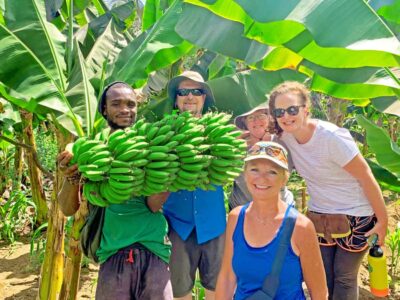
Espargos city tour, Local life and Cape Verde Tapas
Read our review →
Like Locals: Praia and Cidade Velha Tour + Local Pontxi Tasting
Read our review →
Like Locals: Banana Plantation, and Cuscuz with locals
Read our review →Browse the lists this tour appears in