
Reviewed · KITESURFING & SURFING
Sal: Kitesurfing Lessons
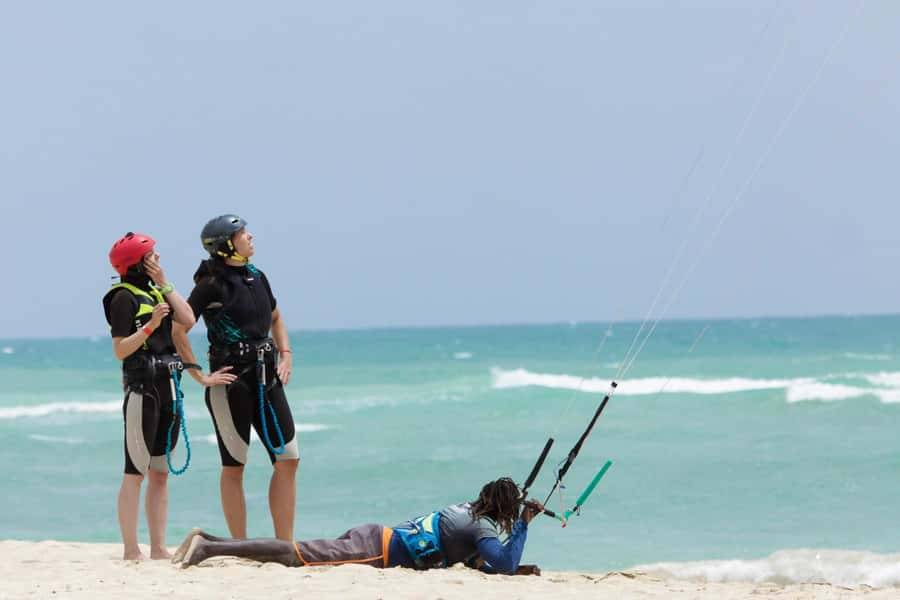
Sal’s steady wind gives this lesson its appeal: you get a real introduction to kitesurfing rather than a beachside demonstration. You begin with a small training kite, learn safety systems, then work in the water with an instructor. The body-dragging practice is especially useful because it teaches you how to move with the kite before a board enters the picture.
I like the private-group format, which lets you learn at a pace that matches your nerves and coordination. I also like that pickup, drop-off, and kite equipment are included in the $141 price. The main catch is simple: two hours may get you started, but it probably will not make you an independent kitesurfer. One participant expected to ride by the end and was told that nine to ten hours of lessons were more realistic.
Key points to know before booking
- You start with kite control, not board riding: The first lesson focuses on flying, safety, body dragging, and water skills.
- You must be able to swim: The instructor enters the water with you, so this is not suitable for non-swimmers.
- The $141 price includes useful extras: Hotel transfers and all kite equipment for the lesson are covered.
- A full course takes several sessions: Board work begins in lesson three, after you can control the kite in the water.
- Sal’s waves can matter: One beginner found the conditions a little challenging for a first session.
- Amy and the team receive warm praise: Their friendly, helpful approach is a plus for a sport that can feel difficult at first.
Starting near Santa Maria’s main square
Your practical meeting point is in Santa Maria, on the ocean road across from Fabrica de Grelhados, close to the main square and Ocean Cafe. After booking, contact the provider by WhatsApp using the number on your voucher.
The start time is not fixed. It changes from day to day, so you need to make contact before the lesson and agree on the time. That flexibility is useful in a wind-dependent sport, but it also means you should not treat the booking time as fully settled until you have spoken with the provider.
Hotel pickup and drop-off are included, which adds real value if you are staying outside the immediate center. You do not need to arrange your own way to the beach or carry bulky kite equipment through town. Food and drinks are not included, so plan around the two-hour session rather than expecting a full beach outing.
The activity is offered as a private group. That wording does not necessarily mean you have a one-to-one instructor, but it does mean the booking is not a large public class. For a first attempt, that can make it easier to ask questions and repeat a skill before moving on.
More kite and surf lessons on Santa Maria Cape Verde:
- Sal: Surf Lesson
★ 4.7 · 48 reviews - Surf Lessons
★ 5.0 · 60 reviews - Kite Surf Lessons on Sal Island
★ 5.0 · 17 reviews
What happens in the first two hours
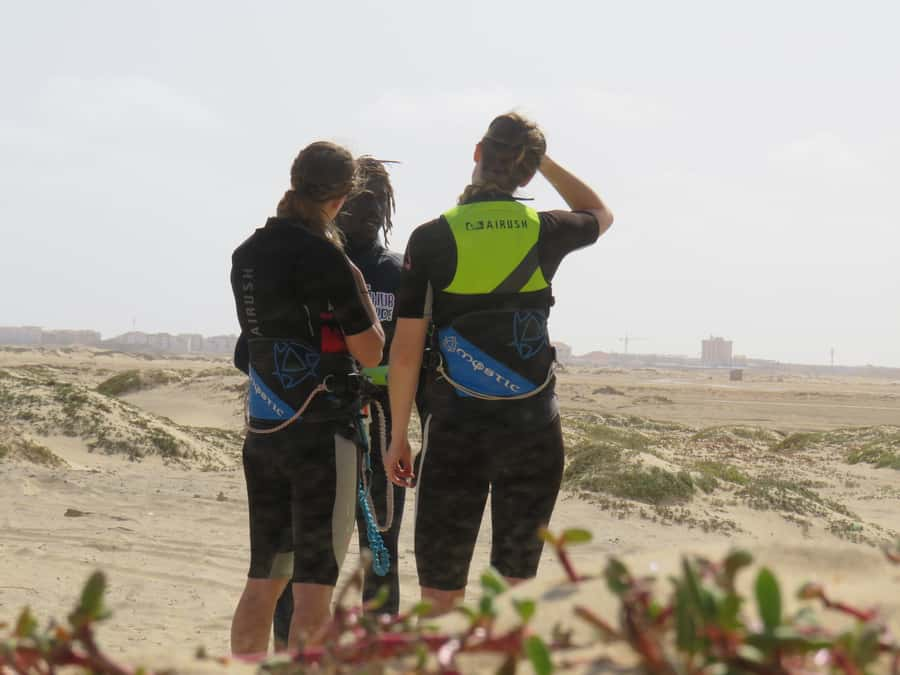
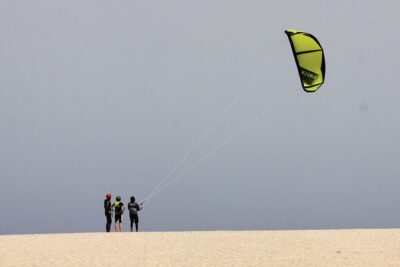
The first lesson, called Intro Kite, combines land and water work. You begin with a smaller training kite and learn the basic flying skills needed to keep it under control.
This stage can feel less glamorous than standing on a board, but it is the part that gives you a chance to understand wind direction and kite movement without immediately managing a board as well. Kitesurfing asks your hands, body, and attention to work together. Starting with one task at a time makes sense.
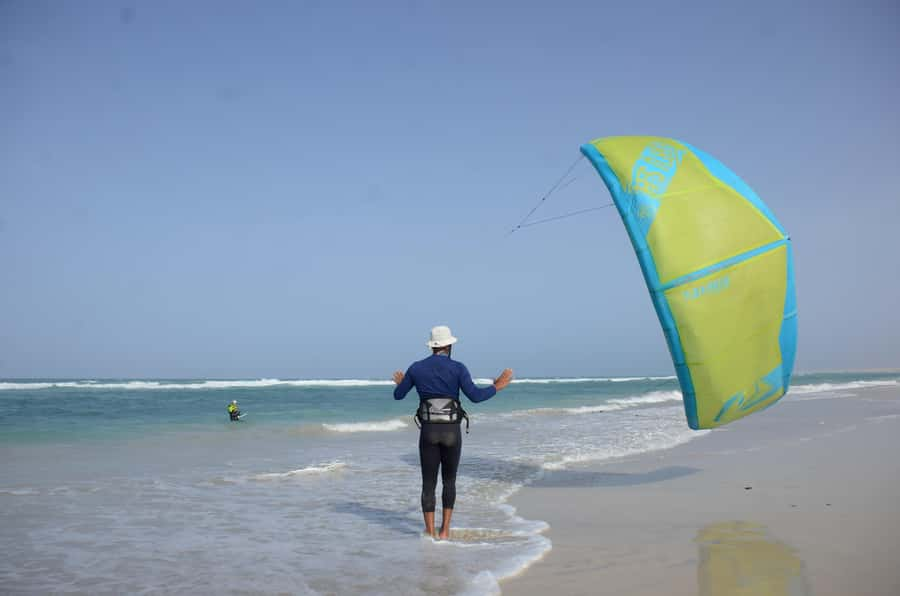
Once you can handle the training kite, the instructor introduces the larger kite and its safety systems. You practice setting it up and learn how to use the safety features before going into the water. That is one of the most important parts of the lesson. A kite can pull with surprising force, so knowing how to release power matters as much as learning how to create it.
You then work on land with the full-size kite. The instructor checks your control before taking you into the sea. This progression is sensible, but you should expect to spend a meaningful part of a two-hour lesson on preparation rather than riding.
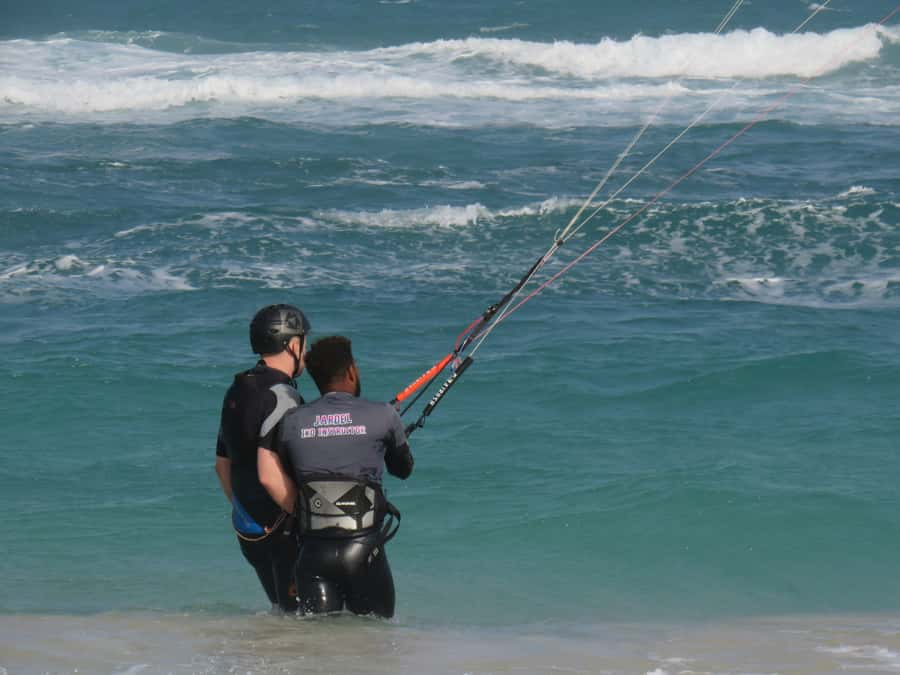
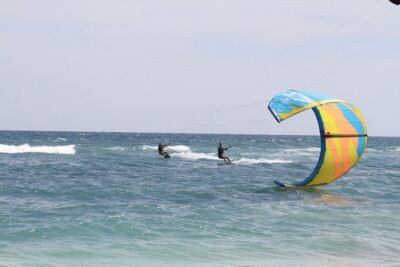
In the water, the focus is body dragging. You use the kite to move through the water without the board. The instructor shows you how to get away from the beach, return toward shore, and relaunch the kite from the water.
That may not sound like the postcard image you had in mind, but it is practical training. If you lose the board or fall during a later session, you need to know how to move safely with the kite. For a first lesson, learning to control your direction and return to the beach is a worthwhile goal.
The course path from kite control to board starts
If you choose the Kite Course, the first lesson includes all the Intro Kite work. The later lessons build in a clear order, and the progression explains why a single two-hour session may not take you to independent riding.
Lesson two: moving upwind and downwind
The second session is water-based. You practice traveling toward the wind, known as going upwind, and away from it, known as going downwind.
You also work on relaunching the kite from the water and changing direction while body dragging. These skills help you control your position in the sea instead of simply being pulled wherever the wind takes you.
This session is important because the water does not stay still and the kite does not always land neatly. You learn to recover from small problems before adding a board. If you are hoping to get on the board quickly, this may feel slow. It is also the stage that can make later board work less confusing.
A few more Santa Maria Cape Verde trips worth comparing
- Sal: Kizomba Group Class – Santa Maria, Cape Verde
★ 4.5 · 28 reviews - From Praia: Banana Plantation Tour and Cuscuz Workshop
★ 4.8 · 75 reviews - Sal Island: Catxupa Cooking Class with a local family
★ 4.7 · 72 reviews - Santiago Island: Banana Plantation, Natural Park & Workshop with a local family
★ 5.0 · 10 reviews
Lesson three: adding the board
The third session introduces the board. At first, you body drag with the board in one hand and the kite in the other.
This is an awkward-sounding exercise, and it probably feels awkward too. You are managing the kite, keeping hold of the board, and staying aware of your position in the water. The instructor waits until you can handle that combination before showing you how to place the board on your feet.
Then comes the water start. This is the moment when you use the kite’s pull to rise onto the board and begin riding. It is a major step, but it is not guaranteed to happen during your first booking. Your progress depends on how quickly you pick up kite control, how comfortable you are in the water, and how the conditions feel that day.
Lesson four: short rides in both directions
By the fourth session, you practice repeated water starts and try to ride a little in each direction.
The stated aim is for you to reach a point where you can kitesurf independently, then rent equipment and continue practicing. That is a useful target, but I would treat it as a course goal rather than a promise for every participant. One person was told that nine to ten hours of instruction might be needed before properly riding, which is a helpful reality check for anyone booking only one session.
Sal’s wind, waves, and the beginner question
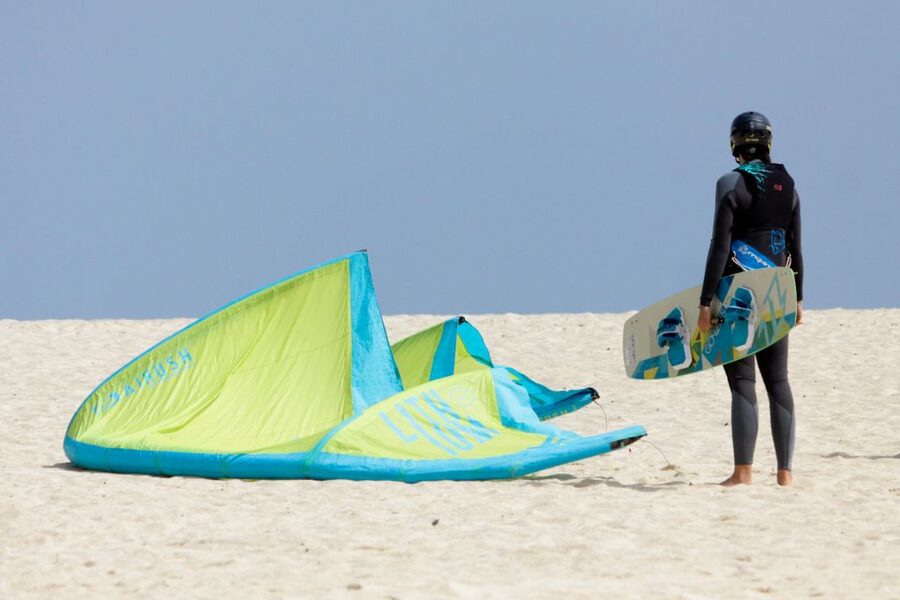
Cape Verde is known for strong wind, and that is the reason this activity works here. Wind gives the kite power, but it also makes the lesson more demanding. You need to listen closely and react to the instructor’s directions.
Waves add another layer. A participant who rated the lesson well still found the waves a little much for a total beginner. That does not mean the session is unsuitable, but it does mean you should arrive ready for physical work and changing water conditions.
The lesson is suitable for complete beginners and people who have tried kitesurfing before. Still, beginner does not mean effortless. You may spend the session learning how to keep the kite stable, relaunch it, and move through the water rather than gliding across the sea.
That distinction matters when you decide if this is right for your holiday. If you want a quick thrill and are happy to learn the basics, the two-hour Intro Kite lesson makes sense. If your main goal is to ride independently, plan for a course of several lessons and confirm how many sessions your booking covers.
You must be able to swim. The instructor enters the water with you, and the lesson includes body dragging away from and back toward the beach. It is not suitable for non-swimmers or people with mobility impairments.
The instructors and teaching style
Instruction is available in English, Portuguese, French, Italian, and Spanish. That is helpful in a technical sport, where a clear explanation of safety systems and wind direction matters.
Amy and the team receive specific praise for being friendly and helpful. That matters here because the first hour can be mentally busy. You are learning kite control, equipment setup, safety procedures, and water movement in quick succession. A calm instructor can make it easier to keep trying when the kite does not behave as you hoped.
The instructors are IKO qualified, which gives you a clear professional standard for the lesson. They do not simply hand you equipment and point toward the sea. The session includes supervised practice on land and in the water, with the instructor entering the water for the body-dragging work.
Because the group is private, you can learn at your own pace. That is useful if you need extra time with the training kite. It is also useful if you have prior experience and want to move through the basic material more quickly. Your progress will still depend on the conditions and the instructor’s safety judgment.
Is $141 good value for two hours?
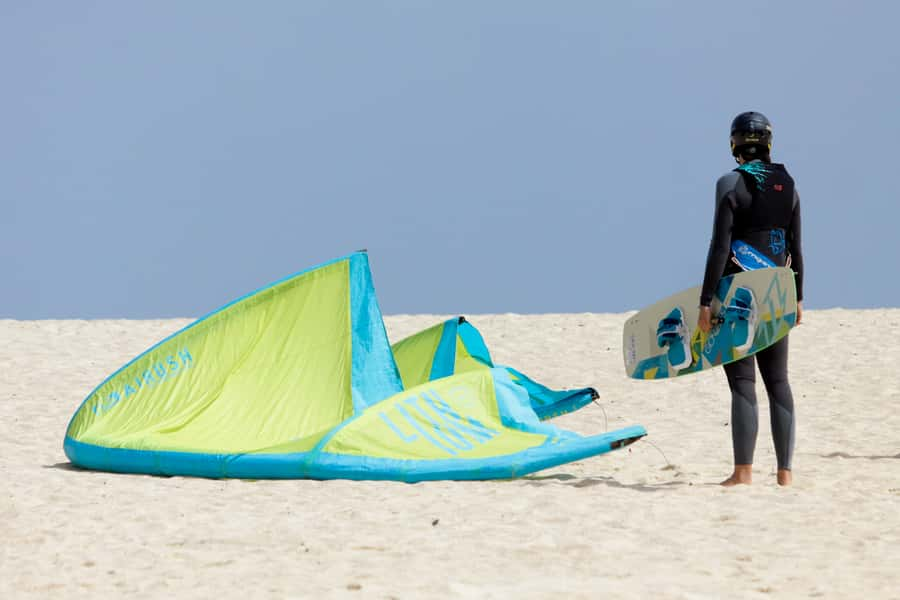
At $141 per person, this is not a cheap casual beach activity. Kitesurfing requires specialized equipment, trained instruction, and careful safety supervision. The price includes the kite equipment for the lesson and hotel pickup and drop-off, which saves you from paying for those separately.
The private-group setup also improves the value if you prefer focused instruction over a crowded class. You are paying for access to a technical sport with an instructor, not just time on a beach.
The weak point is the short duration. Two hours can give you a meaningful first lesson, but it may not deliver the board-riding result some people expect. If you book only one session and assume you will finish by cruising across the water, you may feel disappointed.
Ask yourself what you want from the booking. For an introduction to kite control, safety, and body dragging, the price is easier to justify. For independent kitesurfing, you should budget for more lessons. The course structure suggests that board work comes in the third lesson, with independent riding as the aim by the fourth. A separate comment about needing nine to ten hours reinforces that you should think in terms of training time, not a single stunt.
Before paying, check which option you are selecting: Intro Kite or the wider Kite Course. The basic booking information gives a $141 per-person price, but it does not explain every possible course package or how additional sessions are priced. Confirm that point directly with Surf Hub Cabo Verde.
Who will get the most from this session?
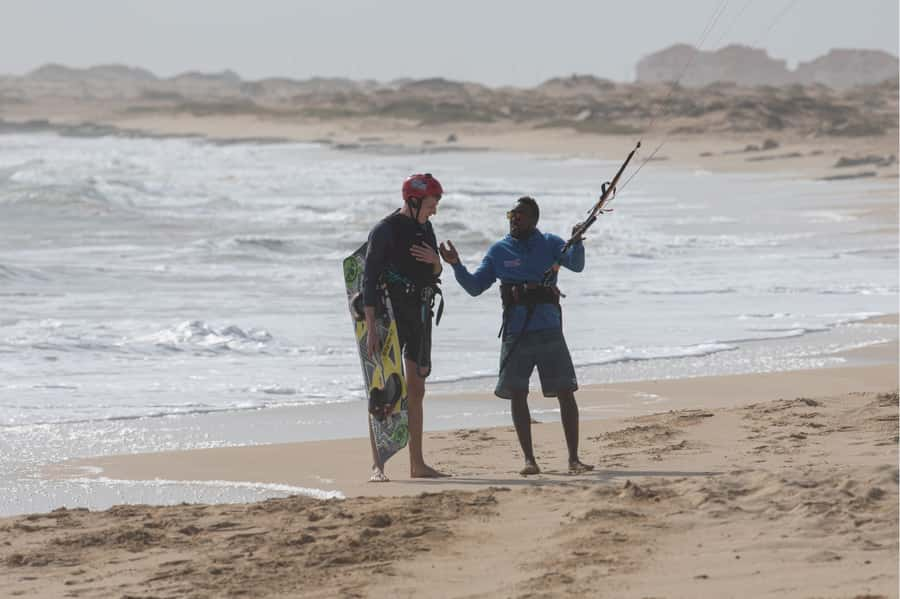
I would recommend it to a reasonably active beginner who can swim, enjoys learning physical skills, and does not need instant results. It also suits someone who has tried kitesurfing before and wants to rebuild basic control with an instructor.
It is a good match if you value:
- A private-group lesson rather than a large class
- Hotel transfers and equipment included
- Instruction in several European languages
- A step-by-step route from kite control to board riding
- The chance to practice in real Cape Verde wind
I would be more cautious if you have limited swimming ability, mobility problems, or only one free activity slot and want guaranteed board time. The first lesson may finish with body dragging and safety work, not independent riding.
You should also leave room in your plans. The meeting time changes each day, and the provider asks you to confirm it through WhatsApp. That is normal for a wind-based activity, but it requires a little more coordination than a fixed sightseeing tour.
Should you book Sal kitesurfing lessons?
Book this if you want a serious introduction to kitesurfing and are willing to treat the first session as training rather than a finished performance. You get an IKO-qualified instructor, equipment, hotel transfers, and hands-on water practice for the $141 price.
Do not book it expecting two hours to turn you into an independent rider. The honest expectation is simpler: you will learn how the kite works, practice safety and body dragging, and perhaps progress toward board work if you choose a longer course and pick up the basics quickly.
For a first lesson in Sal, I like the structure and the personal attention. Just confirm the exact course option, contact the provider about the daily start time, and keep your expectations focused on learning. That is the best way to enjoy the wind without letting the wind decide your holiday mood.
FAQ
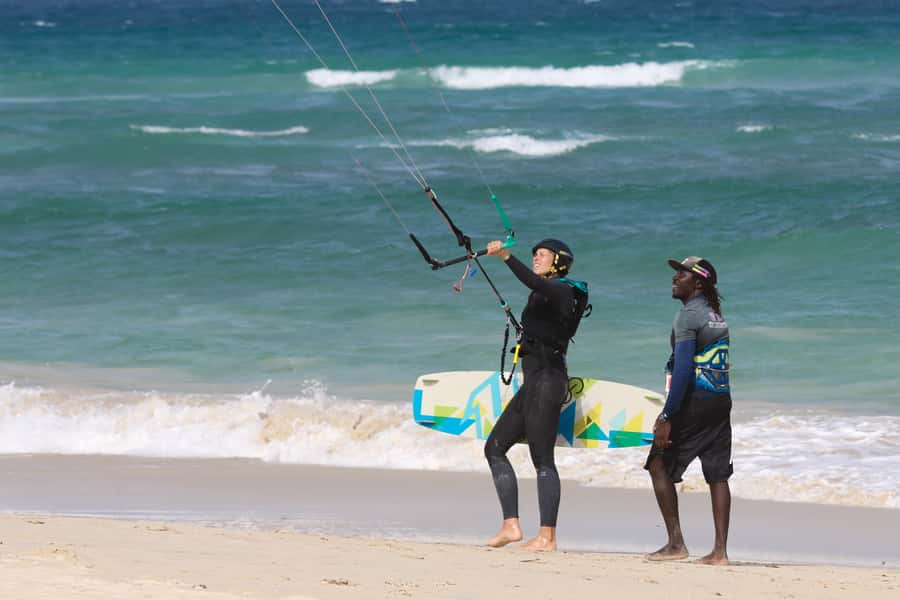
Where do the kitesurfing lessons take place?
The meeting point is in Santa Maria on the road beside the ocean, across from Fabrica de Grelhados, near the main square and Ocean Cafe.
How long does the lesson last?
The listed duration is two hours.
How much does the activity cost?
The price is $141 per person.
Is hotel transportation included?
Yes. Hotel pickup and drop-off are included.
Is kitesurfing equipment included?
Yes. Kite surfing equipment is provided for the duration of the lesson.
Do I need to know how to swim?
Yes. You must be able to swim. The activity is not suitable for non-swimmers.
What is covered in the first lesson?
The Intro Kite lesson covers basic flying with a training kite, setup and safety systems for the larger kite, land practice, and water-based body dragging.
Will I ride a board during the first lesson?
Board work is not the main focus of the first lesson. The course introduces the board in the third lesson, after you have practiced water control and body dragging.
What languages can the instructor speak?
Instruction is available in English, Portuguese, French, Italian, and Spanish.
Can I cancel the booking?
You can cancel up to 24 hours in advance for a full refund. You can also reserve now and pay later.
Newly listed around Santa Maria Cape Verde
- Watch Sea Turtles Nesting – Night Tour in Sal Island★ 4.1 · 14 reviews
- Half Day 4×4 Tour with Viana Desert and Villages★ 4.1 · 8 reviews
- Santa Maria: Half-Day Diving Trip in Sal with Pickup★ 4.7 · 6 reviews
- Santa Maria: Sea Turtle Watching Experience on Sal Island★ 4.0 · 9 reviews
- Santa Maria: Scenic Segway Tour with Guide★ 4.7 · 11 reviews
- Santa Maria Half Day or Full Day Car Rental, Pedra de Lume★ 3.6 · 8 reviews
- Sal: Small Group Island Tour & Lunch with a Local Family★ 4.4 · 3 reviews
- Sal: Turtle Nesting with professional local guide★ 4.7 · 18 reviews
Kitesurfing & Surfing, compared.
Browse the lists this tour appears in