
Reviewed · HISTORICAL TOURS
Sal island: Guided Historical and Cultural Tour
Sal’s story begins with salt, not sun loungers. This four-hour tour takes you from Pedra de Lume’s volcanic salt crater to Santa Maria’s streets, with stops that explain how a dry, remote island became Cape Verde’s main holiday center.
I like the mix of natural sights and everyday culture. You see the strange colors of the salt pans, then learn about local crafts, festivals, old utensils, and the long struggle to secure water. I also like that hotel pickup and a local snack are included, so the half-day feels practical, not padded.
The main drawback is the pace. You cover several parts of Sal in four hours, and the walking in Santa Maria lasts 30 to 50 minutes. This is not the best fit if you need a slow, fully accessible outing or prefer to spend a long time at each stop.
Key points to know before booking
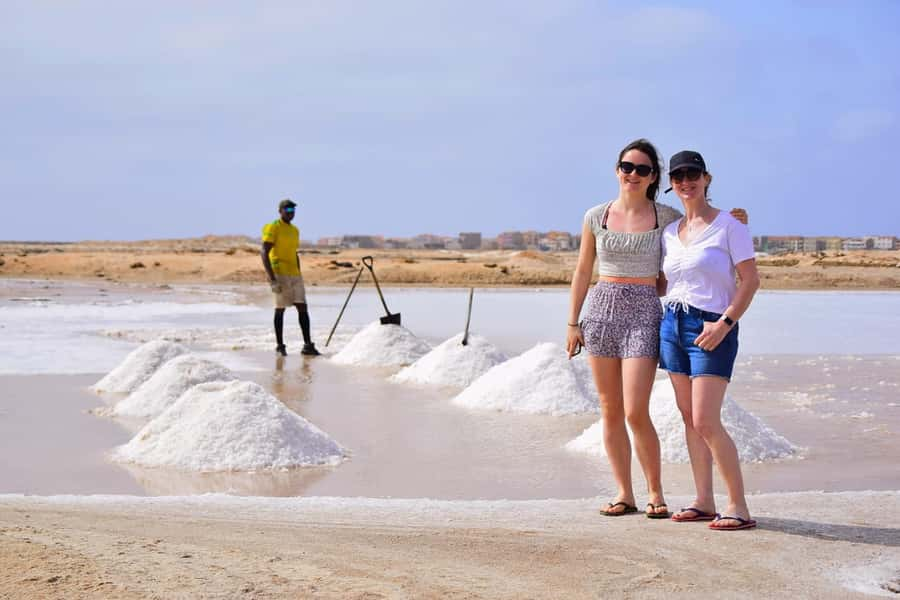
- Pedra de Lume sits inside a volcanic caldera, where salt has formed a striking range of colors from turquoise to pinkish white.
- Guide Chan is praised for answering questions about Sal’s past and present life in Cape Verde.
- The tour links salt, aviation, water, and tourism, giving you a useful picture of how the island developed.
- Santa Maria is explored on foot, with local crafts, historic places, the pier, and the town’s main streets.
- A local drink, aperitif, and snack with sea views are included at the end.
- A moderate level of fitness is needed for the group outing, although a private tour can be adjusted for mobility concerns.
Why this half-day tour helps you understand Sal
Many visitors first meet Sal through its beaches and resort hotels. Those are pleasant, but they tell only a small part of the island’s story. This tour gives you a wider frame: salt production, scattered settlements, air travel, water supply, handicrafts, and the growth of Santa Maria.
That range is the real strength here. You are not simply driven to one viewpoint, handed a few facts, and returned to your hotel. You move through several places that explain why Sal became so important to Cape Verde’s tourism industry.
The guide matters. English, French, Spanish, and Portuguese are offered, and Chan is specifically praised for explaining both historical events and present-day Cape Verdean life. A good guide can turn a drive past an airport or a walk through a town into something meaningful. This experience depends on that human explanation, so the quality of the guiding will shape your day.
At $94 per person, the price is not bargain-basement for four hours. Still, it includes private transportation, pickup and drop-off, a licensed local guide, insurance, a baby seat for children aged four and under, drinks, and a snack. If you would otherwise need to arrange several taxis and separate visits, the price can make sense.
More history stops around Sal:
- Santiago Island: Best of Praia & Cidade Velha Tour, a World Heritage Site
★ 5.0 · 15 reviews - Guided City tour Praia with Cidade Velha (World Heritage)
★ 5.0 · 10 reviews - Shore Excursion: 3-Hour Guided Historic Tour of Praia & Cidade Velha
★ 5.0 · 9 reviews
Pedra de Lume, where Sal’s story begins with salt
Your first major stop is Pedra de Lume, described as the oldest settlement on Sal. It was founded in 1804 by Manuel António Martins, a name you will hear as the tour introduces the island’s early development.
The village walk is short, about 25 minutes, but it gives you a look at local life beyond Santa Maria’s hotel zone. You will hear about the settlement’s attractions, stories, and role in Sal’s past. The point is not to treat Pedra de Lume as a grand old town. It is a small place, and its importance comes from its setting and connection to the salt trade.
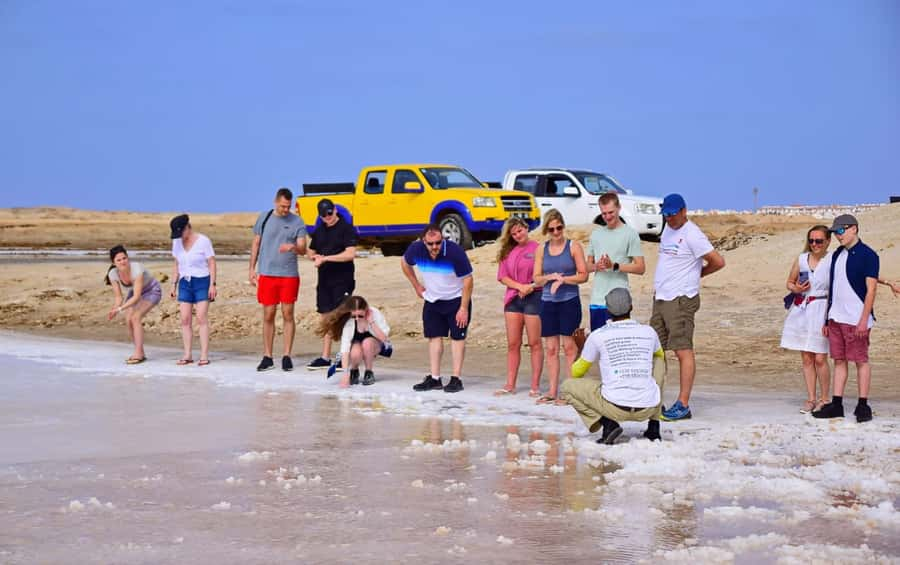
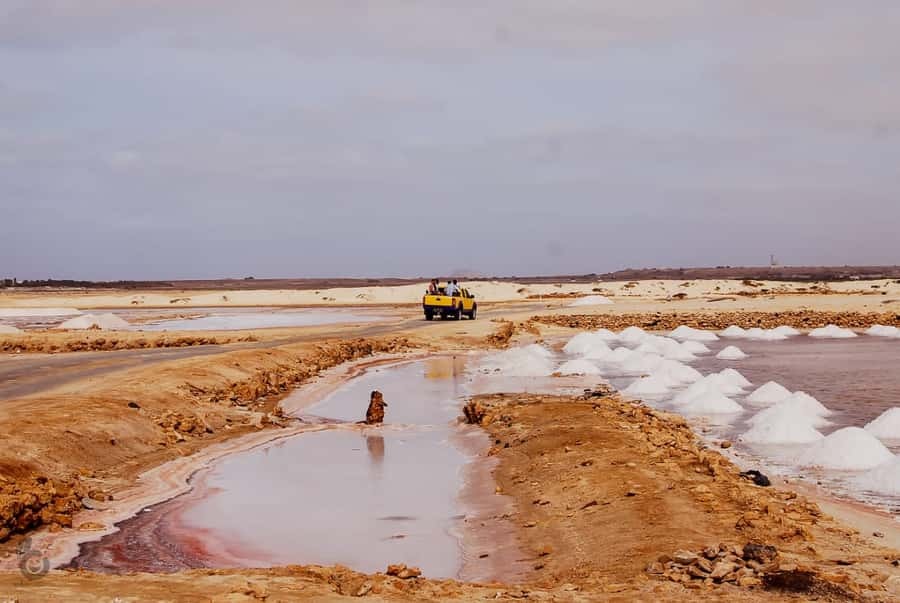
Then you reach the Pedra de Lume salt pans, the tour’s most unusual natural sight. The salt works sit inside the caldera of an extinct volcano, making this one of those places where geology and human industry meet in a very compact space.
The ground can shift in color from turquoise to pinkish white, depending on the salt and water conditions. The site is protected as a natural, historical, and cultural heritage area, and it is on Cape Verde’s indicative list for UNESCO consideration. That status gives you useful context, but the view itself is what holds your attention.
You have around 20 minutes here for a guided visit, photographs, and a walk. That is enough to understand the setting and take in the colors, though it may feel brief if you want a long photo session. Bring sunglasses and sunscreen. White salt reflects strong sunlight, and there is little reason to expect much shade.
Comfortable shoes are important. The route includes walking and is described as a moderate outing. Water, a hat, and light clothing will make this stop easier in Sal’s bright, dry conditions.
The airport drive and Sal’s changing fortunes
After Pedra de Lume, the vehicle passes Amílcar Cabral International Airport. At first, an airport may sound like an odd sightseeing stop. Here, it provides a link between Sal’s earlier isolation and its present role as a major holiday destination.
The guide explains the story of Cape Verde’s airline industry while you travel through the area. This is a drive-by section rather than a full airport visit, so keep your expectations clear. You will not be touring terminals or aircraft collections. Instead, you get a short piece of background that helps explain how people, goods, and tourism reached the island.
This section also breaks up the walking. The tour moves between villages and sights by private vehicle, which is useful on Sal, where attractions are spread out and the terrain can feel open and exposed.
Espargos and the practical side of local culture
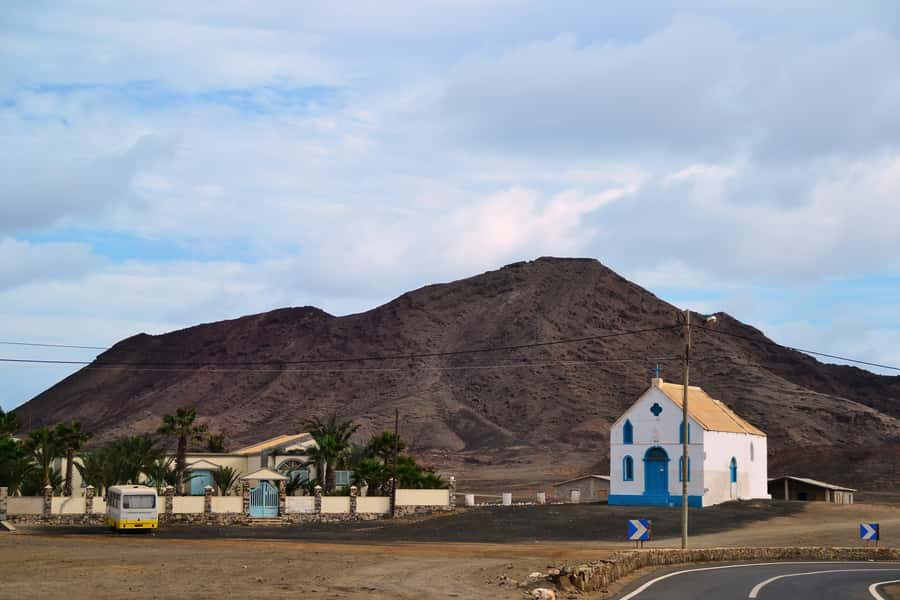
The route continues toward Espargos, Sal’s main inland town. Here, you have a photo stop, guided commentary, and a visit connected with arts and crafts.
This is one of the better chances to look at objects made and sold locally rather than standard resort merchandise. You will learn how to identify the handicrafts and get a closer look at the work itself. If you want to buy something, this is the moment to ask questions before making a purchase.
The supplied details do not promise a long shopping session, so I would treat this as a cultural stop first and a buying opportunity second. You may find that the selection and pace depend on the day and the group. Carrying a large bag is not allowed on the tour, so avoid arriving with luggage or bulky shopping.
Espargos also helps balance the more scenic parts of the day. Sal is not only salt flats and beaches. It is also a working island with towns where ordinary life continues away from the resort strip.
A few more Sal trips worth comparing
- Sal: Island Experience Tour with a Certified Local Guide
★ 4.8 · 3,249 reviews - Sal: All-Inclusive Salt Lake, Blue Eye and Shark Bay Tour
★ 4.7 · 2,033 reviews - Experience on Sal Island with native and certified guide (including sharks)
★ 5.0 · 1,166 reviews - From Sal Island: Blu eye, Salt lake, Lemon Sharks & Palmeira
★ 4.6 · 1,003 reviews
Santa Maria, from main streets to the pier
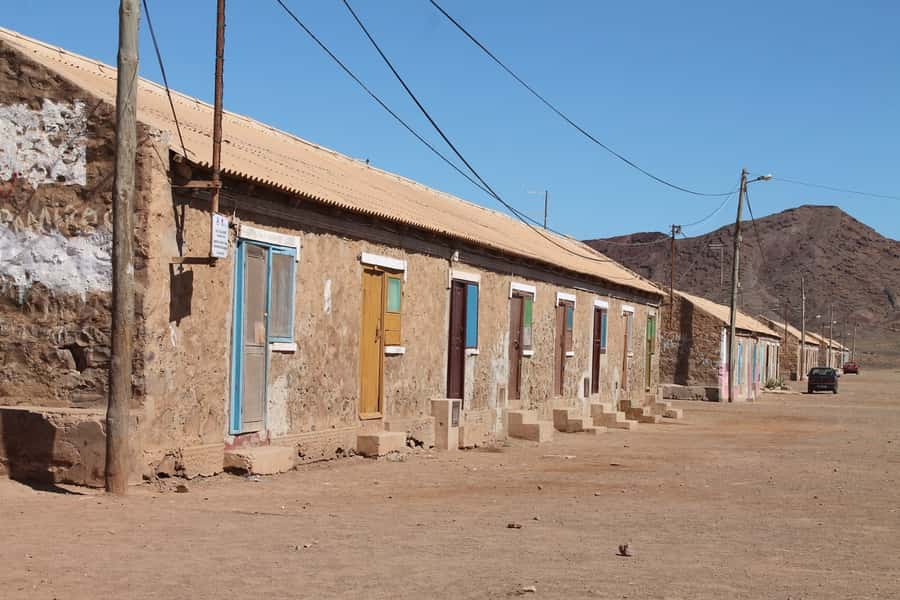
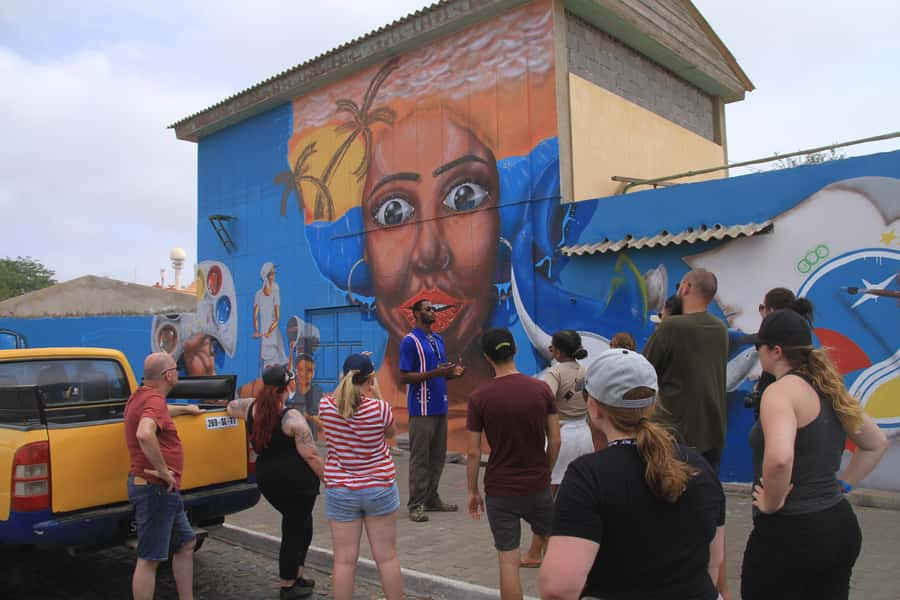
Santa Maria is the final major part of the tour. You will walk through the city’s main streets, learn about its history, and see historic places, local handicrafts, and details of daily life.
The walking section lasts roughly 30 to 50 minutes, depending on the group and route. That is long enough to get a feel for the town, but not long enough for a slow museum-style exploration. Wear shoes that are comfortable on uneven streets, and keep water close.
I like this part because it lets you compare the polished tourist side of Santa Maria with the local traditions that continue around it. The guide points out how to recognize local handicrafts and explains accessories used in cultural festivals. You also see replicas of older utensils, which offer a small but useful link to household life before modern conveniences became common.
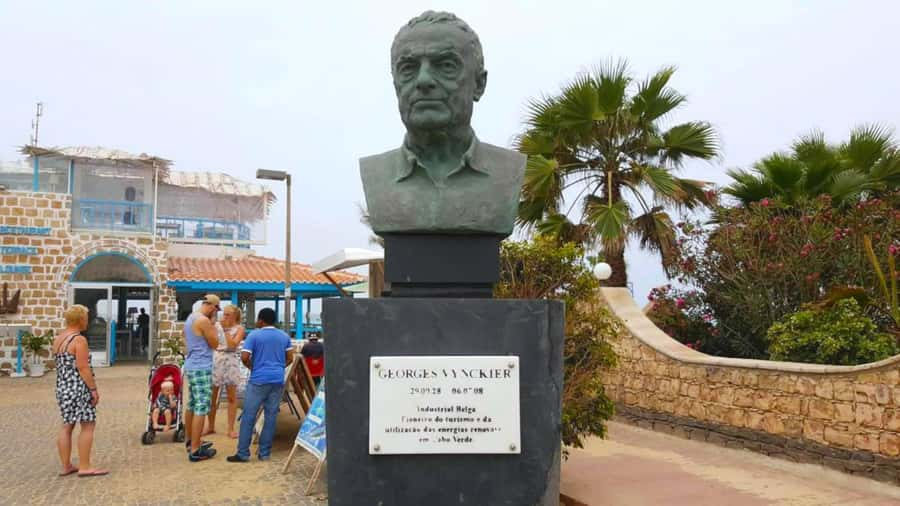
The pier provides a scenic stop, with time for photographs and views toward the sea. It is not presented as a lengthy boat excursion or water activity. You are stopping, looking, and listening. That makes it easy to enjoy, but anyone hoping for swimming or a long waterfront break should choose a different tour.
The schedule also includes an off-road portion around Santa Maria. Since no detailed vehicle route is provided, I would see this as a brief scenic change rather than a full off-road adventure. The main value remains the combination of guided walking and short drives between the town’s key points.
The Water Route and a taste of Sal
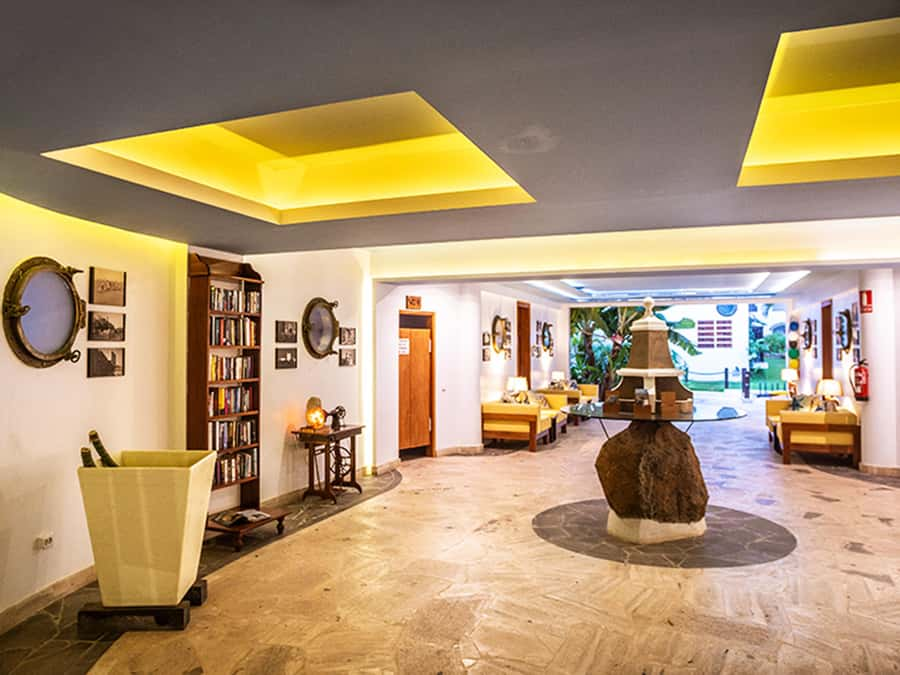
The final cultural stop is the Water Route. This section explains how Sal dealt with the lack of a dependable supply of water, one of the most important practical challenges on a dry island.
Water is easy to overlook when you are on holiday. You turn a tap and expect it to work. Learning how Sal overcame that shortage gives you a sharper understanding of the island’s environment and the effort behind everyday life.
You will also see accessories used in cultural festivals and replicas of old utensils. These details bring the discussion down to a human scale. Instead of hearing only about major events and tourism figures, you get a glimpse of customs, celebrations, and household tools.
The tour finishes with local flavors at a restaurant with sea views. A refreshing local juice, an aperitif, and a snack are included. This is not a full meal, and you should budget for extra food or drinks if you are hungry after several hours out. Still, it is a pleasant way to end a tour focused on the island’s foodways and traditions.
Transport, walking, and the four-hour pace

Pickup is offered from hotel receptions or Airbnb locations in Santa Maria, Espargos, and Murdeira. Pickup can also be arranged from the airport or another agreed location. The listed pickup and drop-off areas include Santa Maria, Sal, Espargos, and Murdeira.
The tour uses private transportation, which matters because the stops are spread across the island. You are not left figuring out local transport between Pedra de Lume, Espargos, and Santa Maria. A baby seat is available for children from birth to four years old.
The experience can operate as a group tour, with a private group option available. If you choose a private format, the route can be personalized for mobility concerns. The general tour is not suitable for wheelchair users, and the city walk requires moderate fitness.
I would not book this as a lazy morning with little movement. You will walk through settlements, salt areas, and Santa Maria, with repeated getting in and out of the vehicle. For most reasonably mobile visitors, it is manageable. If you need frequent rests, ask about the private option before booking.
Languages, timing, and what to bring
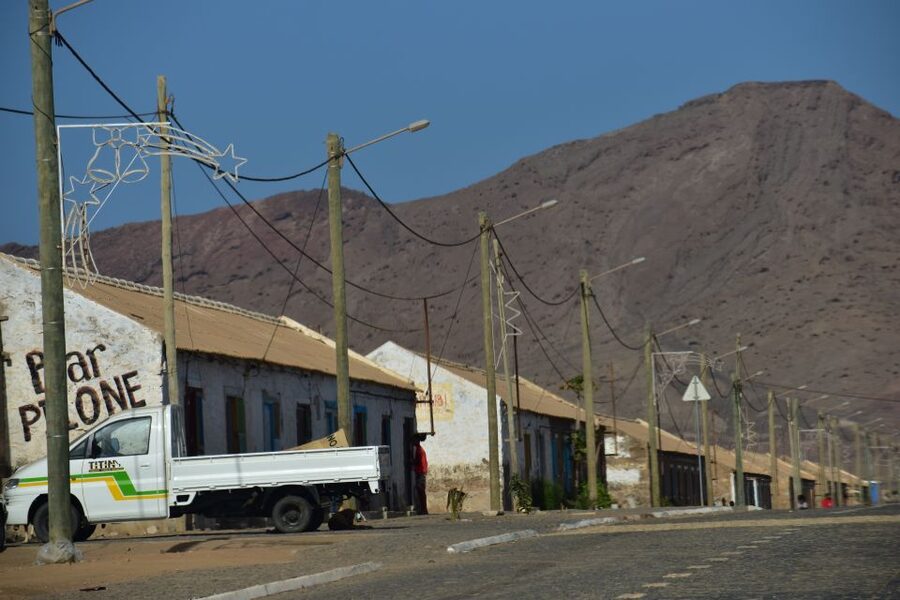
Guiding is available in English, French, Spanish, and Portuguese. The tour lasts four hours, though the exact starting time depends on availability and your pickup arrangement.
Bring:
- Comfortable walking shoes
- Sunglasses and a hat
- Sunscreen
- Water
- Comfortable clothes
Do not bring luggage or large bags. Personal expenses and additional food or drink are not included.
The tour offers free cancellation up to 24 hours before departure, with a full refund, and you can reserve without paying immediately. Those terms are useful if your Sal plans are still shifting, but the main booking decision should be about pace and interests. The tour is strongest for people who want context, not just scenic stops.
Who will get the most from this experience?
I would recommend this tour if you want to understand Sal beyond the beach. It suits first-time visitors who want a broad introduction in half a day, couples who like combining scenery with local culture, and families who value hotel pickup and a child seat.
It is also a good choice if you have only a short stay or a cruise-style visit and want to cover several important areas without arranging transport yourself. The guide’s explanations are especially valuable because some stops, such as the airport drive and Water Route, need context to become interesting.
You may want another option if you prefer a slow pace, a long beach break, extensive shopping, or a full museum visit. The salt pans and Santa Maria are the anchors, but the tour moves quickly between them. The modest number of published ratings means I would treat the positive impression of guide Chan as useful evidence, but not as a guarantee that every departure will feel identical.
Should you book the Sal Historical and Cultural Tour?
Book it if you want a compact, well-rounded introduction to Sal and care about the island’s past, local customs, water supply, and development. The strongest parts are the unusual Pedra de Lume setting, the practical transport, the Santa Maria walk, and the chance to ask a local guide questions about Cape Verdean life.
Skip it if you want an unhurried day or have mobility limits that make a 30 to 50 minute city walk difficult. At $94, the value depends on using the included transport and guide. For a first visit, that combination makes the price reasonable, especially when the final snack, local drink, and sea view are added to a day that covers much more than the resort area.
FAQ
How long does the tour last?
The tour lasts four hours.
Where can pickup take place?
Pickup is available from hotels or Airbnb locations in Santa Maria, Espargos, and Murdeira. Pickup can also be arranged at the airport or another location agreed with the customer.
Which languages are available?
The live guide can provide the tour in English, French, Spanish, or Portuguese.
Is transportation included?
Yes. Hotel pickup and drop-off, private transportation, and liability insurance are included.
Is food or drink included?
A snack and drinks are included. The tour also includes a local juice and an aperitif. Extra food and drinks are not included.
Is the tour suitable for wheelchair users?
No. The tour is not suitable for wheelchair users. The private version can be personalized for people with mobility issues.
How much walking is involved?
The tour includes a 30 to 50 minute walk through Santa Maria, along with walking at Pedra de Lume and the salt pans. A moderate level of fitness is required for the group tour.
What should I bring?
Bring comfortable shoes, sunglasses, a hat, sunscreen, water, and comfortable clothes. Luggage and large bags are not allowed.
Newly listed around Sal
- Watch Sea Turtles Nesting – Night Tour in Sal Island★ 4.1 · 14 reviews
- Secrets of Sal Island 4×4 Tour with Pedra da Lume Salt Lake★ 4.5 · 6 reviews
- 3-Hour Shark Bay and Salt Lakes in Sal Island Guided Tour★ 4.5 · 19 reviews
- Turtle Experience in Sal island★ 4.0 · 5 reviews
- Sal island: Private Santa Maria City Tour, Street Art and Tapas★ 5.0 · 6 reviews
- Sal Island: 3-Hour Private Tour with Floating in Salt lake & Shark Watching★ 5.0 · 8 reviews
- Small Group Full Day Island Tour in Sal★ 4.0 · 12 reviews
- Sal island: Espargos city tour, Local life and Cape Verde Tapas★ 4.5 · 22 reviews
Historical Tours, compared.
Santiago Island: Best of Praia & Cidade Velha Tour, a World Heritage Site
Read our review →
Guided City tour Praia with Cidade Velha (World Heritage)
Read our review →

Shore Excursion: 3-Hour Guided Historic Tour of Praia & Cidade Velha
Read our review →
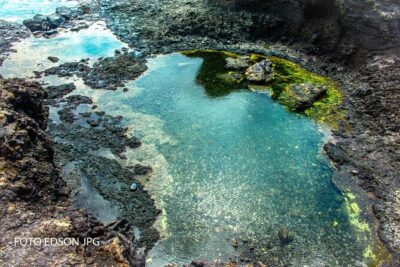
2. Nature, History of FOGO and relaxation at the natural pool of Salinas
Read our review →Browse the lists this tour appears in