
Reviewed · SANTO ANTãO TOURS
Santo Antão: Full Day Island Tour & Visit to Cova de Paúl
Santo Antão saves its best views for the mountain roads, and this tour takes you straight to the island’s high point: Cova de Paúl, a huge volcanic crater more than 1,000 meters above sea level. I like the mix of big scenery and ordinary island life, especially the fruit farms around Ribeira da Torre and the fishing boats at Ponta de Sol. The stop at a local distillery is another strong touch, since you taste grogue where it is made.
I also like that the day includes Fontainhas and Vale de Paúl, two very different views of Santo Antão. The tradeoff is clear: seven hours means plenty of time in and out of a vehicle, and the $106 price does not include lunch. Your experience may also depend on the guide. Riva and Mitch Adams have earned especially warm praise, while one guest found Maira’s commentary too limited.
Key points to know before booking
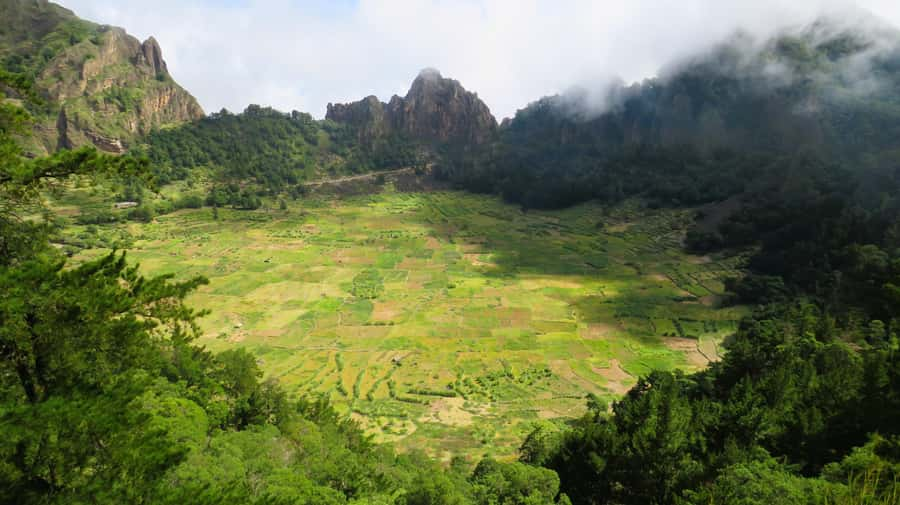
- Cova de Paúl rises above 1,000 meters, with an agricultural plain spread across the old crater floor.
- Delgadin gives you a mountaintop view of the rock towers near Ribeira da Torre.
- Ponta de Sol adds coastal life, including local fishermen and their small traditional boats.
- Fontainhas is a major photo stop, known for its dramatic setting and broad sea views.
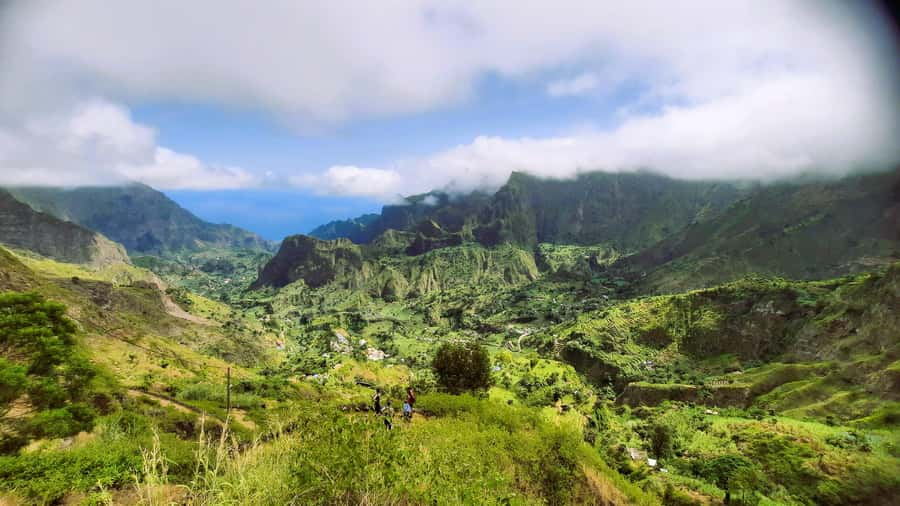
- Vale de Paúl is the island’s greenest valley, filled with farms, thatched-roof homes, fruit, and vegetables.
- Grogue tasting is included, while lunch is not, so plan for that extra cost.
Cova de Paúl, Santo Antão’s high mountain bowl
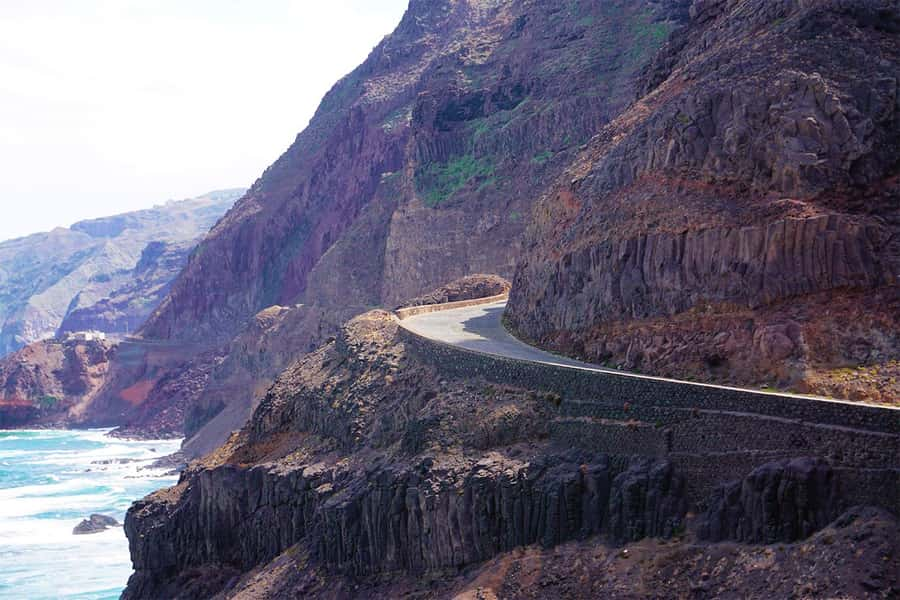
The tour begins with pickup at your accommodation, followed by a drive through Santo Antão’s mountains toward Cova de Paúl. The road itself is part of the attraction. You are moving from the island’s coast and villages into a high, open setting where the air, rock, and fields create a sharp change of mood.
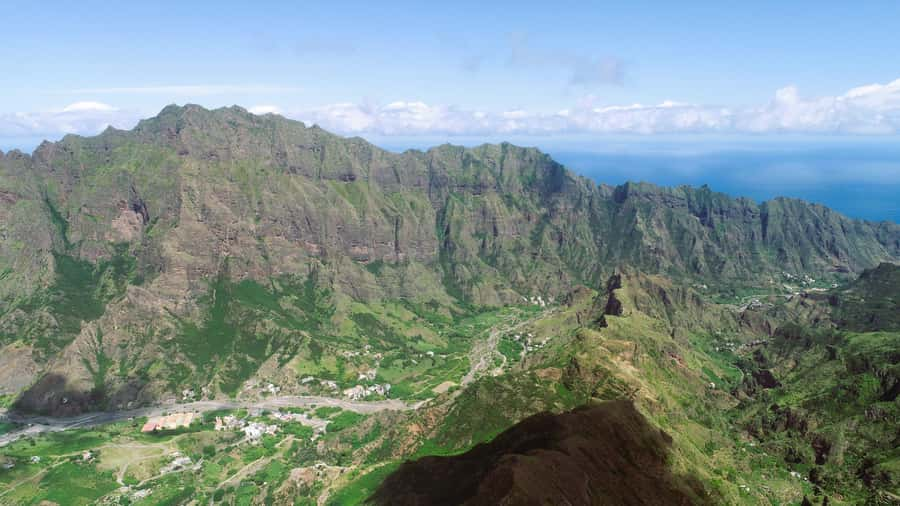
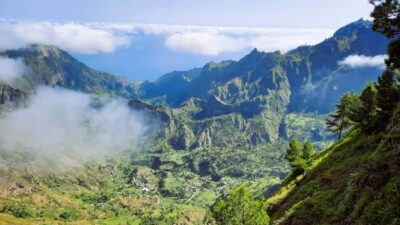
Cova de Paúl is described as Cape Verde’s largest volcanic crater. Its extinct volcano rises above 1,000 meters, and the broad interior is not an empty bowl of rock. People use the crater floor as agricultural land, so your view includes a large green plain shaped by farming.
That combination is what makes the stop worthwhile. You see the volcanic structure, but you also see how residents use the land. The crater is not just a geological feature for a quick photograph. It is part of daily life on Santo Antão.
Bring a hat and sunscreen. The tour information does not promise shade at the viewpoints, and you will want to be ready for bright conditions during the stops. The high elevation also makes this a place to pause and take in the view rather than rush through it.
A few more Santo Antão trips worth comparing
- Full-Day Island Tour in Santo Antão with Lunch Included
★ 4.5 · 14 reviews - Santo Antão: Full-day Island Tour & Visit to Cova de Paúl Volcano Crater
★ 5.0 · 7 reviews - Sal Island: Guided Full-Day Highlights Tour with Lunch
★ 4.7 · 414 reviews
Delgadin and the rock towers of Ribeira da Torre
From Cova de Paúl, the route continues to Delgadin, a mountaintop viewpoint near Ribeira da Torre. Here, the attraction is the shape of the valley below, where natural rock formations rise like towers.
This is one of the tour’s strongest scenic stops because it gives you a different view from Cova de Paúl. The crater is wide and rounded. Delgadin is more about steep relief, carved rock, and the way the mountains gather around the valley.
The drive continues toward Povoação, one of Santo Antão’s main cities, and through Ribeira da Torre. Along the way, you see fruit and vegetable cultivation. That detail matters. Santo Antão is often admired for its dramatic mountains, but the farms explain how these valleys support communities.
I would pay attention to the guide here. A strong guide can connect the rock formations with farming, settlement, and the island’s water-fed valleys. Guides named Riva and Mitch Adams have received particularly strong praise for explaining the island’s history, culture, agriculture, and mountains. The assigned guide is not guaranteed, though, so ask questions when you stop.
Ponta de Sol and the small fishing boats
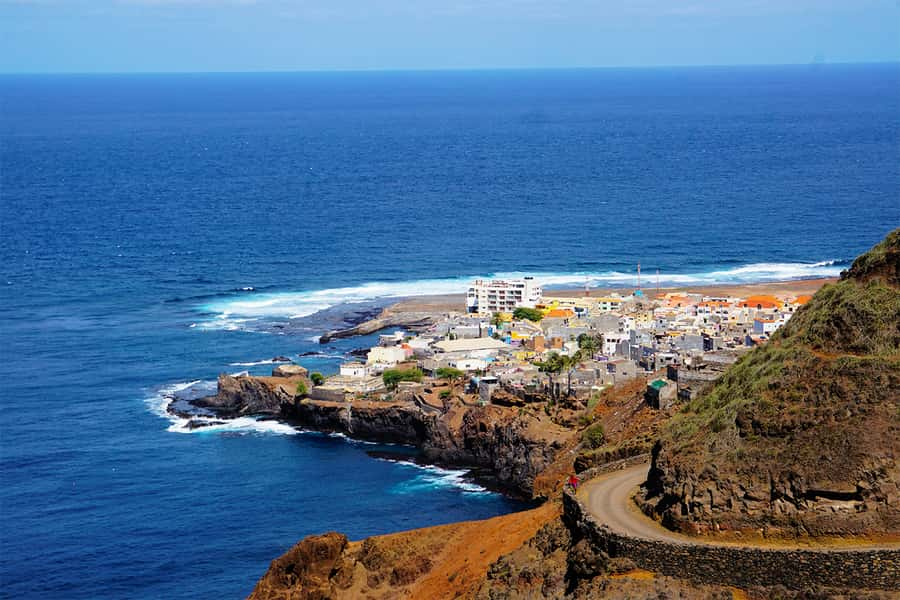
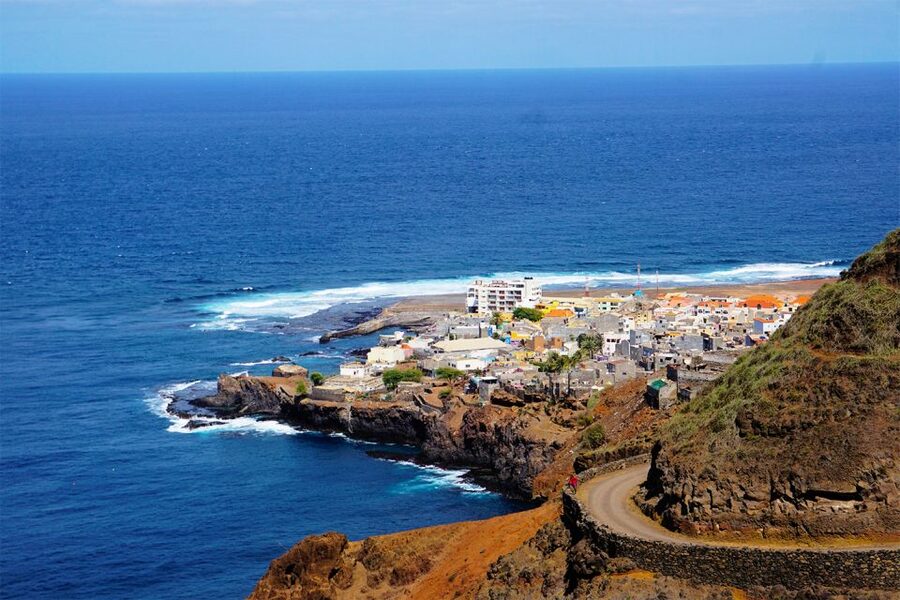
The tour then heads toward Ponta de Sol, a coastal village where the pace changes again. You get a chance to meet local fishermen and see their small traditional boats.
This stop gives the day a human scale. After looking across an immense crater and down into deep mountain valleys, you are watching work happen close to the water. The boats are modest, and that is precisely the point. Ponta de Sol offers a look at an active coastal community rather than another viewpoint designed only for sightseeing.
The schedule describes this as a chance to meet the fishermen, but it does not promise a formal demonstration or a long visit. Think of it as a short village stop within a packed route. It is best enjoyed by taking time to notice the boats, harbor activity, and surrounding buildings instead of treating it as a quick photo backdrop.
The tour has several such stops, which explains why one recent guest described the day as a lot of getting in and out of the van. That can feel tiring, but it also means you see much more of Santo Antão than you would from one fixed base.
Fontainhas and the island’s famous viewpoint
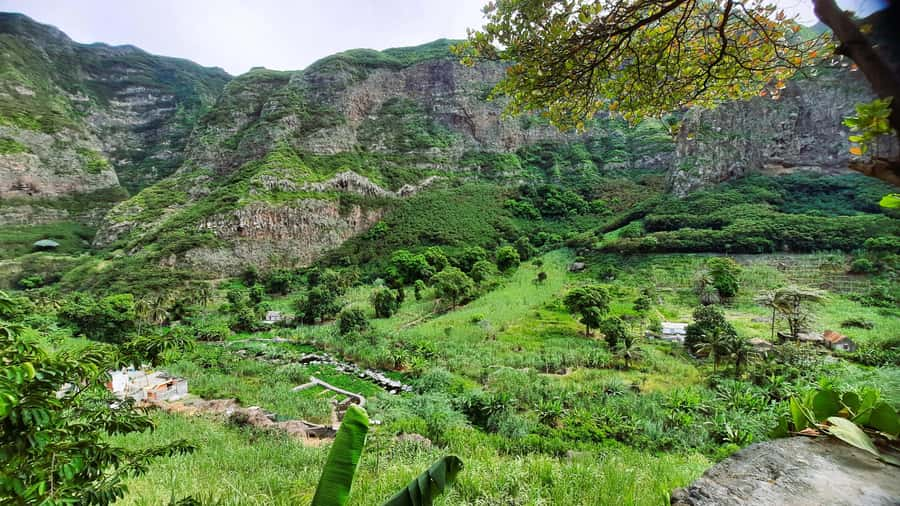
From Ponta de Sol, you continue to Fontainhas, a picturesque village known for its spectacular setting. It has been recognized by National Geographic as one of the 10 villages with the best views in the world.
That is a large claim, but the reason for the attention is easy to understand from the itinerary. Fontainhas sits among steep mountain forms with wide views around it, giving you another strong contrast with the open crater at Cova de Paúl.
This is likely to be one of the day’s most memorable photo stops. Still, the experience is not only about taking a picture of the village. Look at how the homes fit into the slopes and how the road approaches the settlement. The setting shows how closely Santo Antão’s communities are tied to the mountains.
You should also expect a stop here rather than a long village walk. The tour covers a lot of ground in seven hours, so the exact time at Fontainhas may depend on the group and the guide. Comfortable shoes are sensible, although the supplied information does not describe the tour as a hike.
Same island, a completely different sort of day:
- Santo Antão Highlights: Day Trip by Car with Ferry from SV
★ 4.8 · 84 reviews - Santo Antão: Day Trip by Car or Trek
★ 5.0 · 72 reviews - Santo Antão: Hiking Cova Volcano Crater to Ribeira Paúl
★ 4.5 · 31 reviews - Santo Antão: Ponta do Sol & Fontainhas Guided Trip with Hike
★ 4.8 · 9 reviews
Lunch in a local setting
Lunch comes after the Fontainhas portion of the route, in a local setting. It is not included in the $106 tour price, so keep money aside for the meal.
That arrangement gives you some freedom, but you should not assume that the meal is covered simply because it is part of the schedule. The activity promises a delicious local lunch, but it does not state a fixed menu, restaurant, or price.
I like the placement of lunch in the middle of the day. You have already seen the high crater, mountain rock formations, coastal Ponta de Sol, and Fontainhas. A meal provides a needed pause before the route continues into Vale de Paúl.
The food stop is also one of the better chances to experience the island at a normal pace. Several parts of the tour are built around views and short visits. Lunch lets you sit down, eat, and take in the local atmosphere without watching the clock at every moment.
Vale de Paúl, Santo Antão’s greenest valley
After lunch, the tour heads to Vale de Paúl, often described as Cape Verde’s greenest valley. The scenery here is shaped by agricultural fields, fruit and vegetables, and homes with thatched roofs.
This is not the same kind of beauty as Cova de Paúl. The volcanic crater gives you scale and height. Vale de Paúl gives you close-up detail: cultivated plots, houses, and a valley filled with signs of work.
I especially like this part for anyone who wants more than mountain photographs. The valley shows how Santo Antão’s natural conditions support farming and village life. The colors and textures come from the fields and homes, not from grand monuments.
The supplied tour details describe the atmosphere as peaceful and authentic. That is a fair expectation, but keep in mind that the route is still a sightseeing drive with planned stops. You may have time to look around, but the itinerary does not promise an extended walk through the valley.
This is another place where the guide’s knowledge can change the quality of the visit. A guide who explains the crops, homes, and local agriculture gives meaning to what you are seeing. Riva was praised for guiding skill, and Mitch Adams was singled out for his understanding of the mountains and his calm, thoughtful way of sharing information.
A taste of grogue at a local distillery
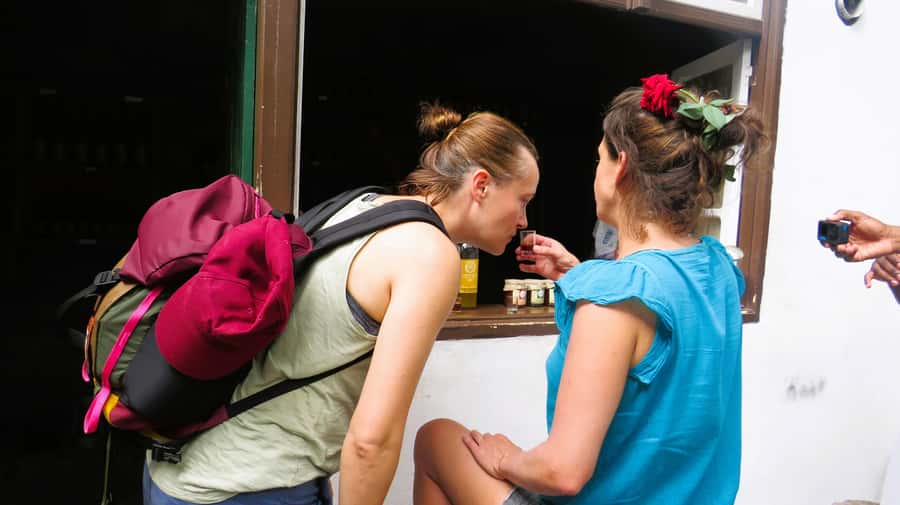
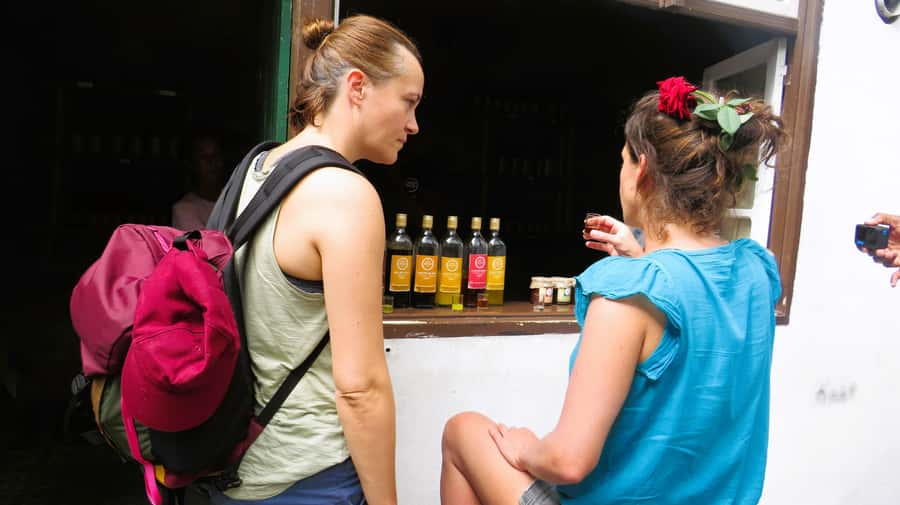
The distillery visit adds a very different kind of stop. Grogue is Cape Verde’s famous local rum, and you get to taste it at a distillery.
For many people, this will be one of the most memorable details of the day because it connects the drink to its place of production. It is not simply a bar tasting added at the end of a tour. The stop gives you a look at a local product and its role in Cape Verdean culture.
Drink carefully, especially after a full day in the sun. The tour does not state how many samples are offered or whether nonalcoholic alternatives are available, so you should not assume a large tasting or a choice of drinks. You can still enjoy the stop for its local setting and production story, even if you choose only a small taste.
The distillery visit is also a good reason to ask the guide questions. You may learn more about how grogue fits into village life and local trade, but the amount of explanation can vary by guide. One Spanish-speaking guest felt that a guide gave too little information during some stops, so this is a tour where active questions can improve your day.
Sinagoga and the final drive back
Before the tour ends, you visit Sinagoga, an extinct Jewish village that still preserves its character. The supplied information gives no further detail about the length of the stop or the sites you will enter, so expect a brief visit rather than a full museum program.
Sinagoga adds historical depth after a day centered mostly on geology, farming, fishing, and village scenery. It reminds you that Santo Antão’s story includes communities and cultural traces as well as mountains and fields.
The tour finishes with drop-off at your accommodation. Pickup and return transportation, a guide, and liability insurance are included. The pickup instruction is simple: wait in the hotel lobby 10 minutes before the scheduled time.
What $106 buys you
At $106 per person, this is not a cheap scenic drive. The value comes from the amount covered in one day: accommodation pickup and drop-off, transportation, a live guide, Cova de Paúl, Delgadin, Ribeira da Torre, Ponta de Sol, Fontainhas, Vale de Paúl, a distillery tasting, and Sinagoga.
You are paying for access to several parts of Santo Antão without arranging separate transport between mountain villages and the coast. That matters on an island where the route itself is part of the experience and where a local guide can help connect the scenery to agriculture, culture, and village life.
The price looks better if you want a broad first look at Santo Antão and do not want to plan several individual outings. It looks less attractive if you prefer a slow walk, one village, or long unhurried meals. The day is built for coverage, not lingering.
Remember the extra cost of lunch. The tour includes the stop but not the meal. Also note that private and small-group options are available, but the supplied details do not give separate prices or group sizes. Check those details before paying.
Who will enjoy this day most
I would recommend this tour to you if you want Santo Antão’s major scenic contrasts in one outing. It suits first-time visitors, photographers, people staying in the area covered by pickup, and anyone who wants both mountain views and village life.
It is also a good choice if you enjoy learning through conversation. Guides may speak English, French, Portuguese, or Spanish, and the best moments are likely to come when you ask about farming, the rock formations, fishing, grogue, and the island’s past.
You may want something else if you dislike vehicle-based sightseeing. The day involves repeated stops, and one particularly positive account still noted a lot of getting in and out of the van. There is no indication that this is a dedicated hiking tour.
Guide quality deserves honest attention. Riva and Mitch Adams were praised for their warmth, mountain knowledge, and explanations of island life. Itza and Ivan were also associated with a very enjoyable day that included useful stops for local snacks, drinks, and photographs. Another experience with Maira was judged less satisfying because several stops lacked explanation. Since the guide can shape the day, confirm the available language and ask questions early.
Should you book the Cova de Paúl tour?
Book it if you want a wide-ranging introduction to Santo Antão and value convenience, scenery, and local stops more than a relaxed pace. Cova de Paúl, Fontainhas, and Vale de Paúl give you three strong reasons to go, while Ponta de Sol, Sinagoga, and the grogue tasting add variety.
Skip it if your priority is a long hike or a quiet day in one valley. Also calculate the real cost with lunch included, and remember that commentary may vary with the guide assigned to you.
For the right kind of visitor, this is a practical way to see Santo Antão’s volcanic heights, farming valleys, fishing coast, and village culture in seven hours.
FAQ
How long is the Santo Antão island tour?
The tour lasts seven hours, including transportation, scenic stops, village visits, lunch time, the distillery visit, and the return to your accommodation.
What is the price of the tour?
The listed price is $106 per person. Lunch is not included, so you should budget separately for that meal.
Is hotel pickup and drop-off included?
Yes. Pickup and drop-off at your accommodation are included. You should wait in the hotel lobby 10 minutes before the scheduled pickup time.
What languages can the guide speak?
Live guides are available in English, French, Portuguese, and Spanish.
Is this a private tour or a group tour?
Private or small-group options are available. The supplied information does not give the exact group size or the price difference between the options.
What will I see at Cova de Paúl?
You will see Cape Verde’s largest volcanic crater, an extinct volcano more than 1,000 meters high, and a broad green plain inside the crater that is used for agriculture.
Is lunch included?
No. The tour includes a stop for lunch in a local setting, but you pay for the meal separately.
Can I taste grogue during the tour?
Yes. The itinerary includes a visit to a distillery where you can taste grogue, Cape Verde’s famous local rum.
Newly listed around Santo Antão
- Santo Antão: Full-day Island Tour & Visit to Cova de Paúl Volcano Crater★ 5.0 · 7 reviews
- Full-Day Island Tour in Santo Antão with Lunch Included★ 4.5 · 14 reviews
- Santo Antão: Hike Ponta do Sol – Fontainhas – Cruzinha★ 5.0 · 6 reviews
- Ribeira Grande: Hiking Day Trip to Ribeira de Torre★ 4.9 · 4 reviews
- Paúl hike, the green garden★ 4.5 · 4 reviews
- Hike from the Cova Volcano Crater to Ribeira Paúl★ 5.0 · 3 reviews
- Cova–Paúl Valley Trek: Santo Antão Day Trip by Ferry★ 5.0 · 7 reviews
- Santo Antão: Ponta do Sol & Fontainhas Guided Trip with Hike★ 4.8 · 9 reviews
Santo Antão Tours, compared.
Santo Antão Highlights: Day Trip by Car with Ferry from SV
Read our review →
Full-Day Island Tour in Santo Antão with Lunch Included
Read our review →
Trekking Cova de Paúl Volcano Crater – Ribeira de Paúl
Read our review →
Cova–Paúl Valley Trek: Santo Antão Day Trip by Ferry
Read our review →
Full-day Island Tour & Visit to Cova de Paúl Volcano Crater
Read our review →Browse the lists this tour appears in